


Morning. We visit a jungle today that’ll soon turn back into a lake. We have out there news about Eyam Moor, Sheffield’s upcoming walking and heritage festivals, and the chance to have your say about the incoming gravity park at Parkwood Springs. We also remember Paul Besley and John Batley, two local outdoorsmen who passed away recently.
And hello to all the new subscribers after the launch of our Commoner’s Muck section. (Our Big Village post about citywide volunteering came out online on Friday).
If you like what we’re doing here, please think about upgrading below - it really is the only way we can pay the bills and keep going.
A Lake’s Progress
Seek out any abandoned urban factory and you’ll find nature recovery everywhere, without help from us. (Check our archive for all our stories about green brownfield sites).
Now try a suburban lake, cracked open three years ago by a disintegrating dam wall.
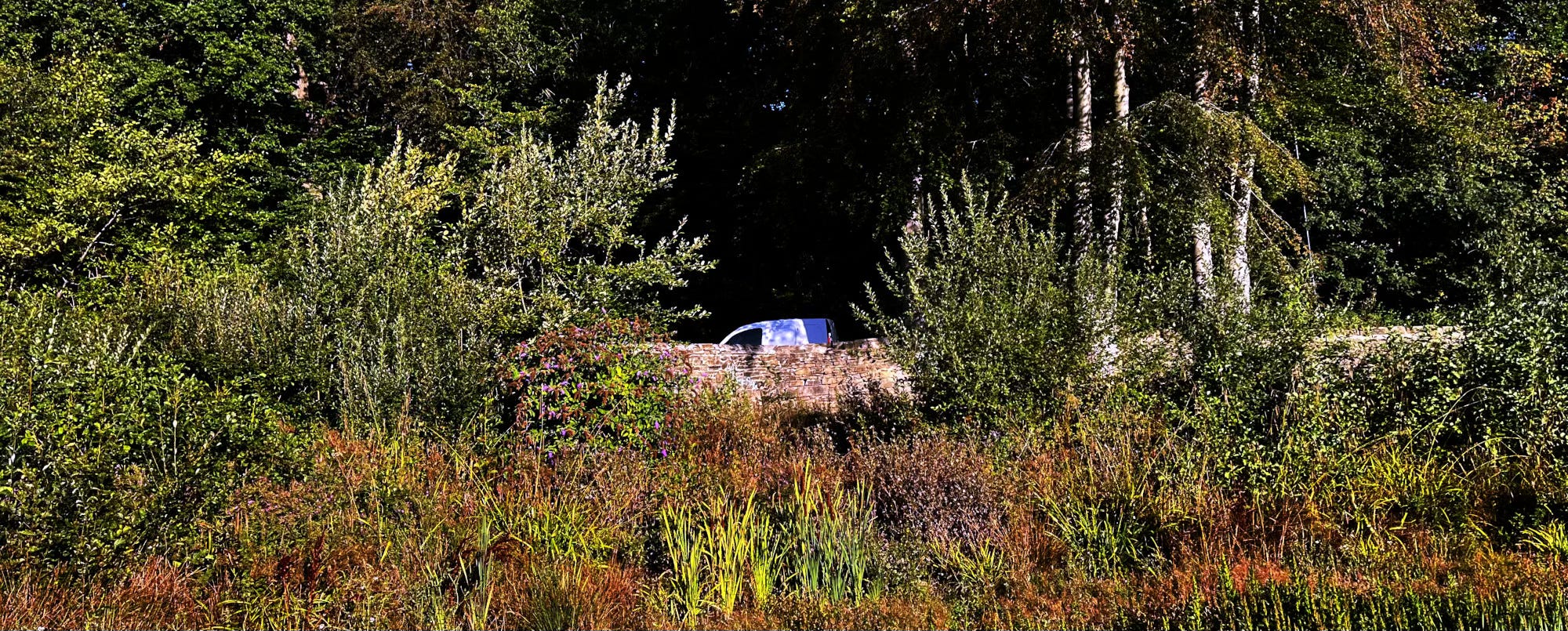
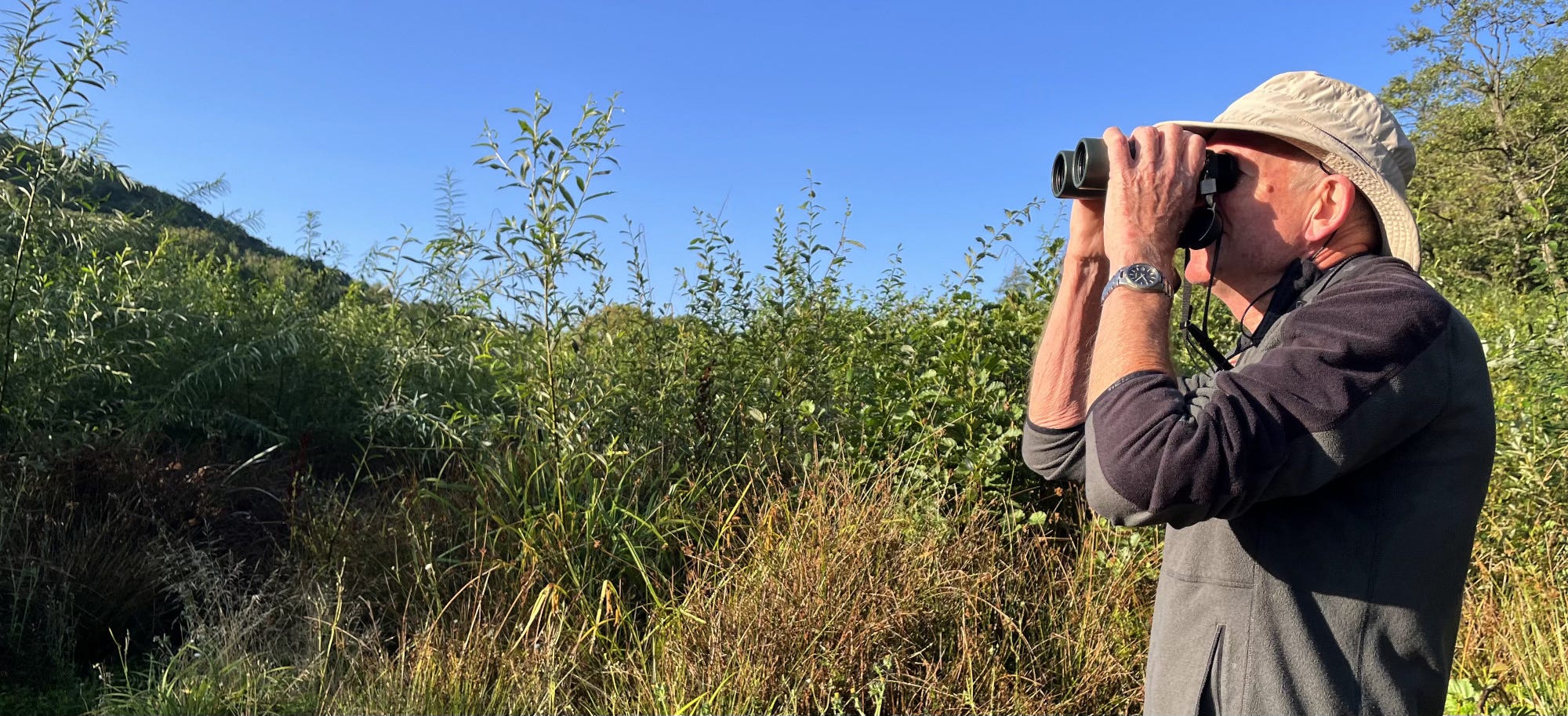
From the jungle of Tyzack’s Dam, the traffic of Abbeydale Road South is almost invisible. I’m with Pete Brown from Sheffield Bird Study Group, striding through reeds and willow forests where Pete has recorded 74 species of wildfowl, gulls, egrets, woodland and marsh birds in the watery past.
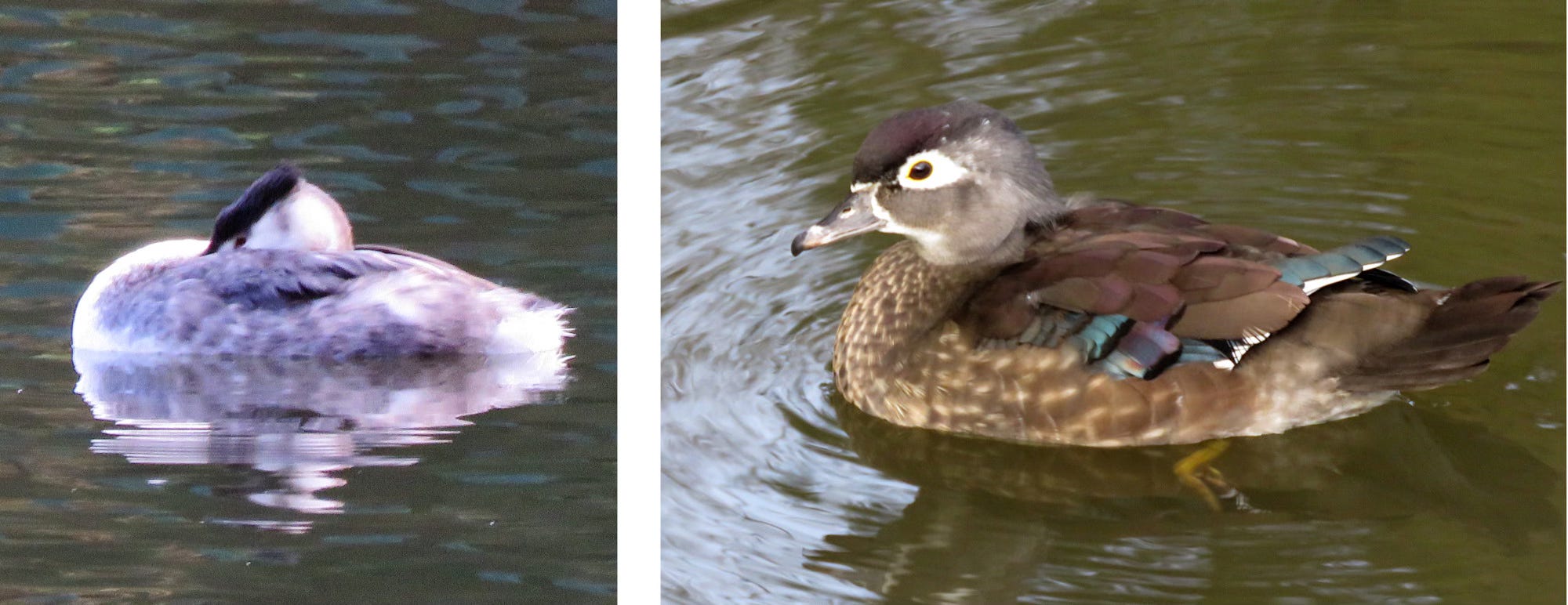
Before the 250 year old dam drained away in 2023, Pete would pass by most weeks, picking out summer Barn Swallows and winter Great Crested Grebes, gasping through his binoculars at wandering rarities like a North American Wood Duck, and wondering if Arctic Loons would ever return? (Last recorded in 1938, Pete notes).
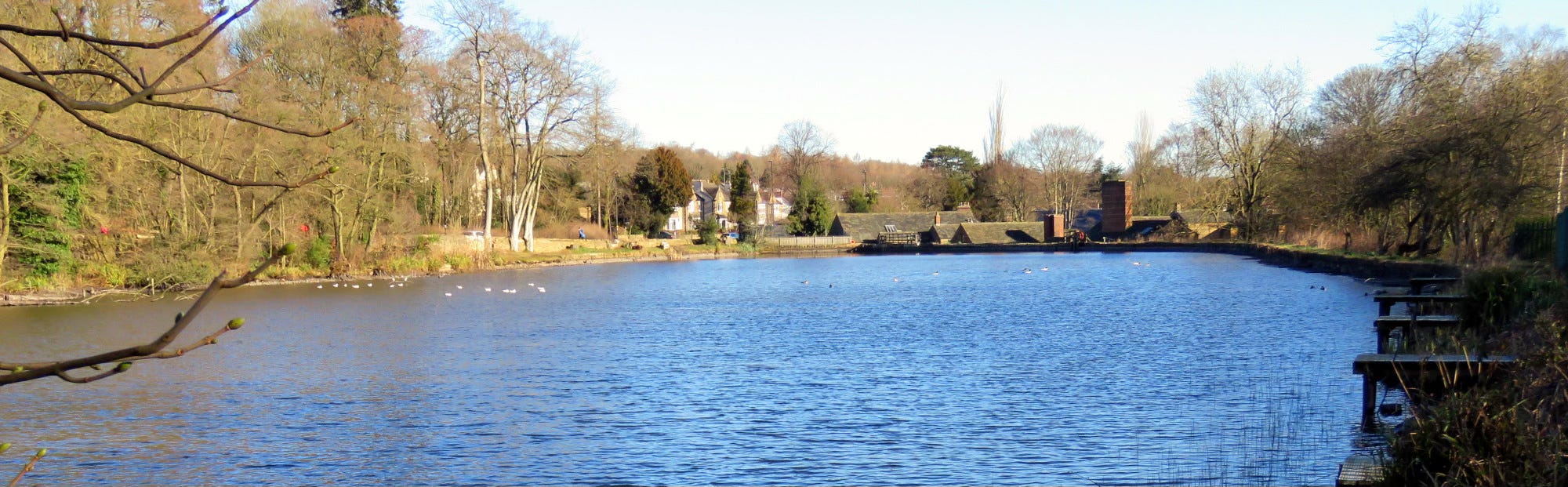
This autumn, the council aim to finally restore the dam, the only little lake in the area, originally built on old contaminated metalworking land in the late 1700s to power the forges of Abbeydale Industrial Hamlet.
Leaks first appeared in the dam wall in 2021, and after temporary repairs, Tyzack’s Dam was drained in 2023. Since then, Pete says he’s watched hundreds of willow, alder and birch trees take root here and take over, until in the drought of 2026, just a large puddle remained.
It’s mid August (before the rains came), and Pete and I scramble out through the rampant reeds and grasses and imagine the old dam, where Sheffielders in the traditional weather of the 1880s paid a small fee to local hospital charities for ice skating every winter, and where warnings were posted about thin ice above the 15 foot depths near the dam wall.
We listen to Robins and Wrens in the undergrowth, and Pete picks out a late Chiff Chaff in the distance. He explains how birds and insects care little for the thin strip of the A621 between this three year old jungle and the ancient Ecclesall Woods to the west.
But there’s really only one smallish pond in the whole Ecclesall woodland, he says, so a little lake, when it’s here, provides an important asset for local wildlife.
Later this month, say the council, much of the willow forest should be cleared, mostly using hand tools and leaving most of the cut trees and foliage to rot down on the edges.
Natural mud and clay from the site may shore up the edges of the new lake that will start to reappear, fed by the River Sheaf once the sluice at the south of the site is reopened to slowly restore the water.
We head back to what we hope will be the shoreline later this year, then step through a thicket and up through an unassuming gap in the wall to stroll south alongside the traffic.
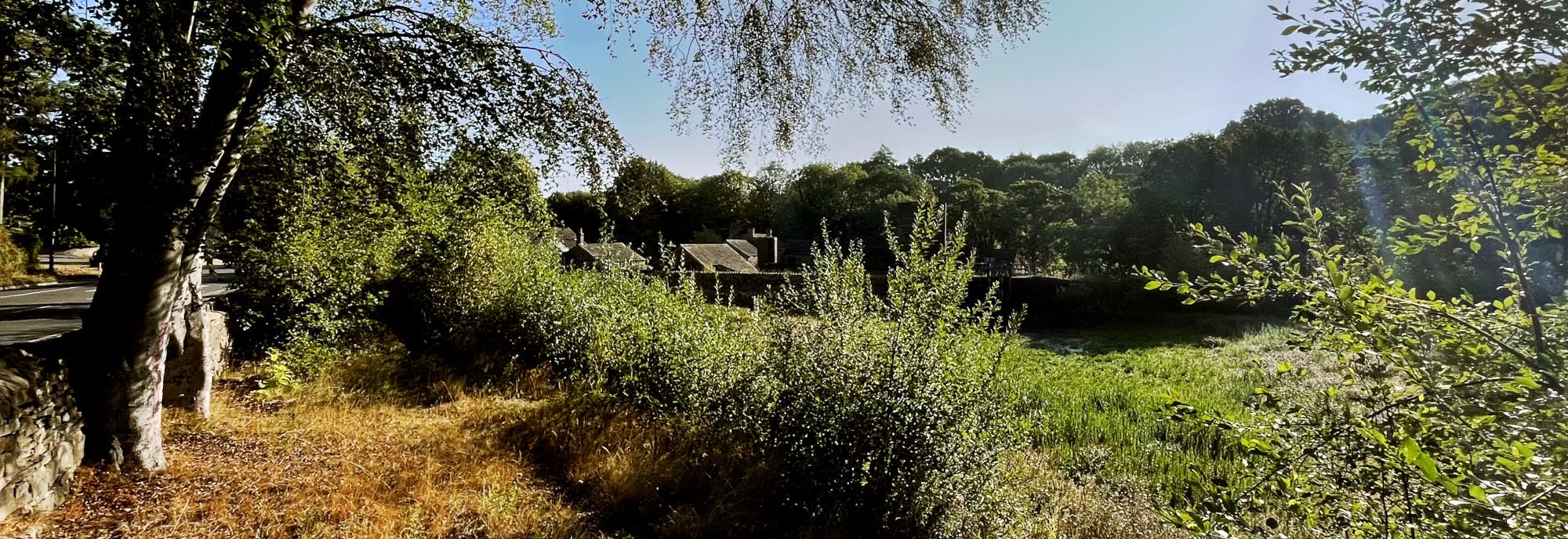
At the end of the soon-to-be lake is Beauchief Gardens, a small park that was once the dampish extremity of the old Abbeydale Dam, as the place was called a few hundred years ago, before it took on the name of the former owners, the metalworking Tyzack family.
The park edged the lake, with a short path to a locked gate by the railway line. Pete listens carefully to the bushes and picks out a Goldcrest over the sound of trains rushing by.
He organised a bird sighting board here, along with the local Rotary Club who help look after the park, but the board disappeared soon after the lake, he tells me sadly.
We talk about the comings and goings of local wildlife over the 46 years he’s been strolling by, often on walks he’s led to explore the landscapes of the Sheaf valley.
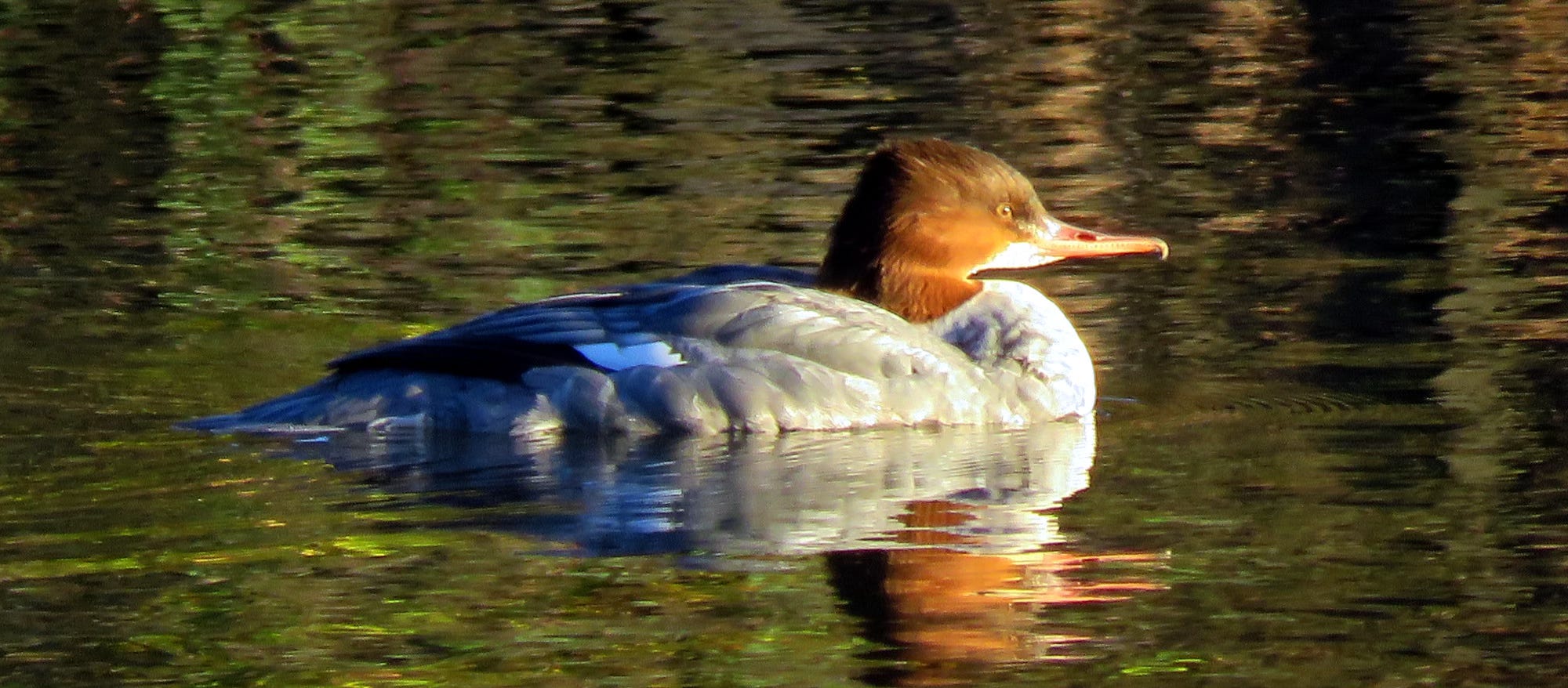
Birds would once rest here in hard weather, he says, after following the river valley to the largest body of water they could find along the Sheaf. Migrants called in on the way through the city, and woodland birds came here to drink, rest and feed.
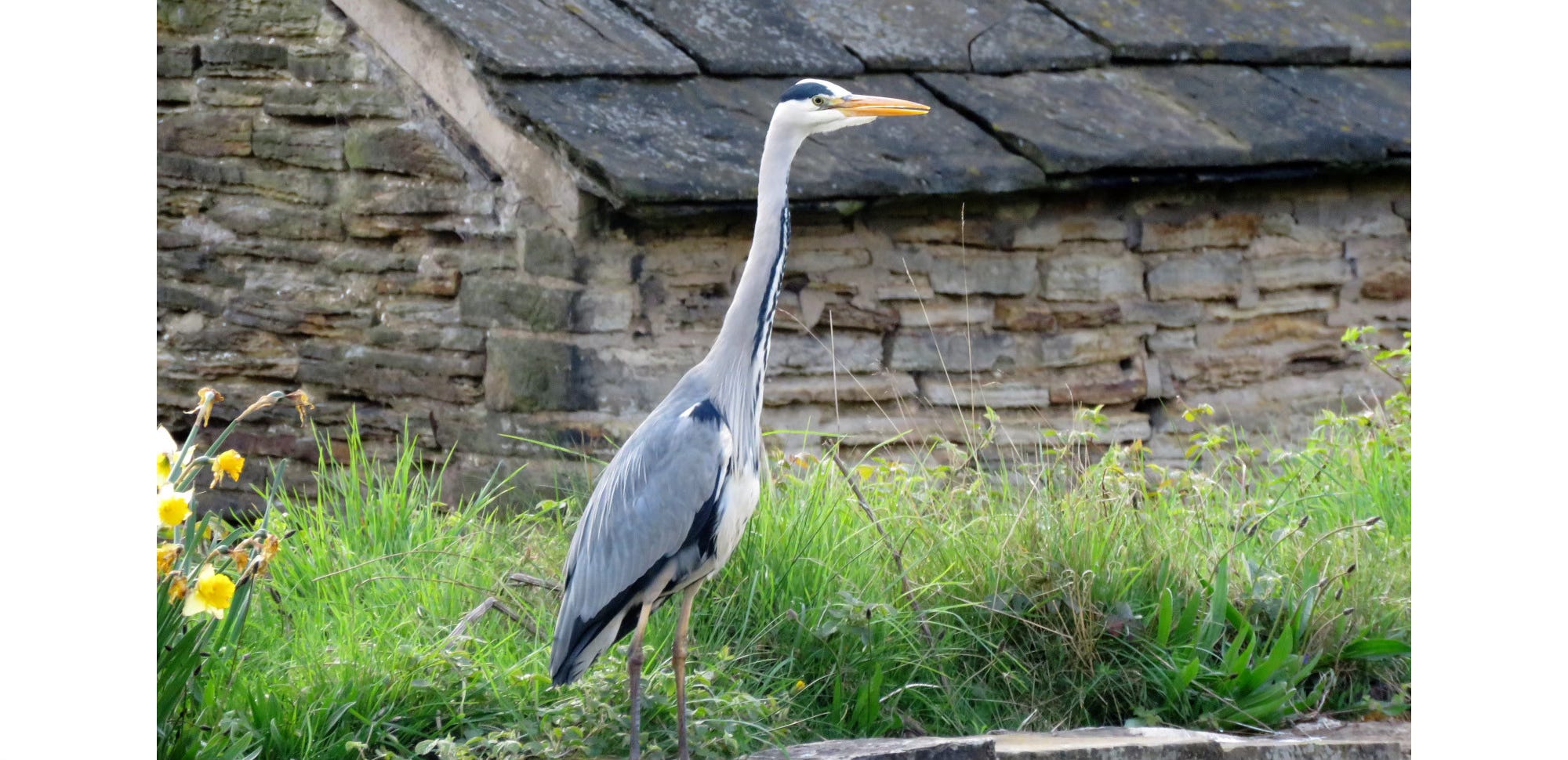
Pete sends me a recent photo of a siege of herons, lurking like shifty gangsters in a pool of grey mud.
And he remembers the summer days when dozens of Barn Swallows flickered over the water. He once saw them chased by a marauding Hobby, before returning to their nests in the walls and roofs of Abbeydale Industrial Hamlet, which their ancestors had used for over 200 years.
The swallows have gone now, he says. Last year he was told the hamlet had seen no swallow nests at all. That in itself, he says, “is an indication that nature is in real trouble.”
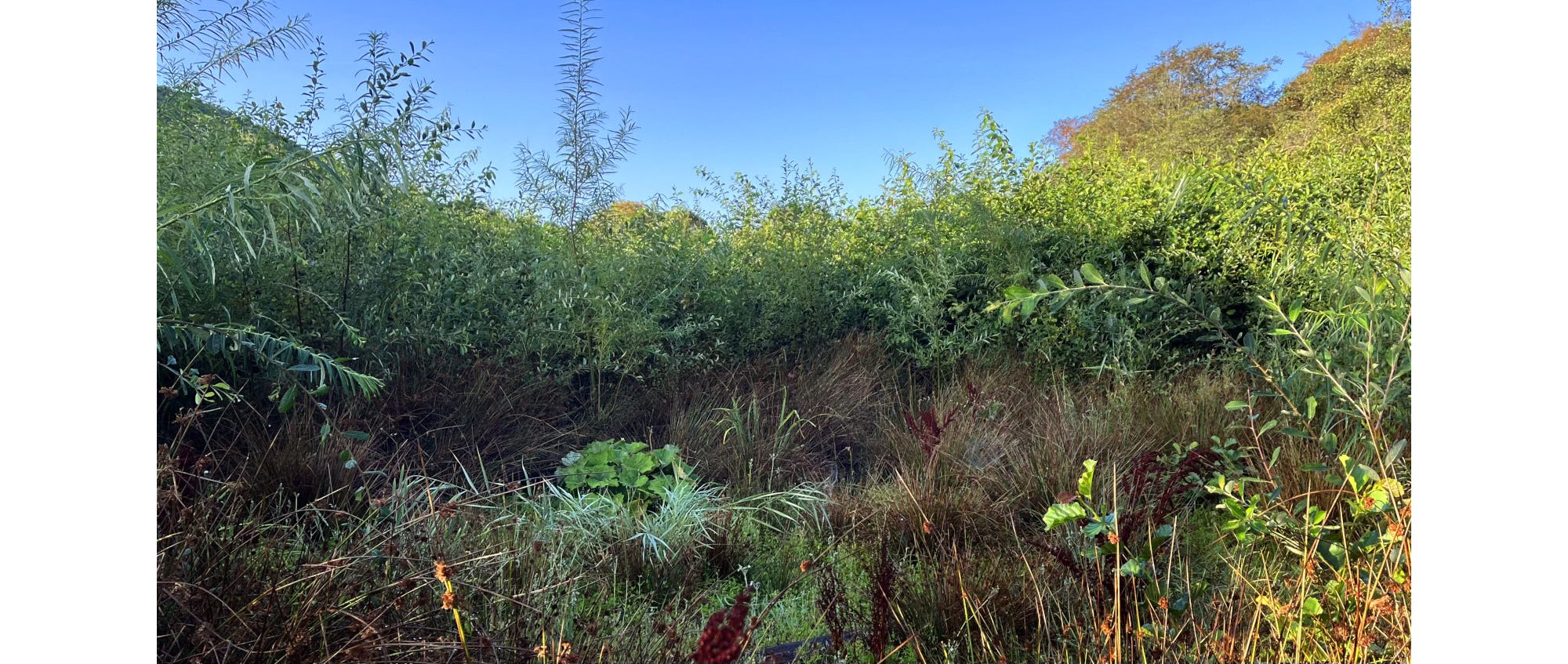
After I send over a photo of the Tyzack’s Forest of 2026, our straight talking botanical adviser Gerry Firkins returns to me with a note. “Wow!” he says, about the profusion of plantlife that’s taken off on the lake site over the last few years.
But it’s nothing exciting he says. “They’re plants you would get on almost any rubble site that was tending to be damp.” He adds there’s still plenty of interest, and as the water returns there’ll be new patches where important edge habitat species will make a home.
Pete Brown is happy with the plans to remove most of the vegetation, and to restore the water body and some bankside profusion, and he’d like a few reed beds to support a range of species.
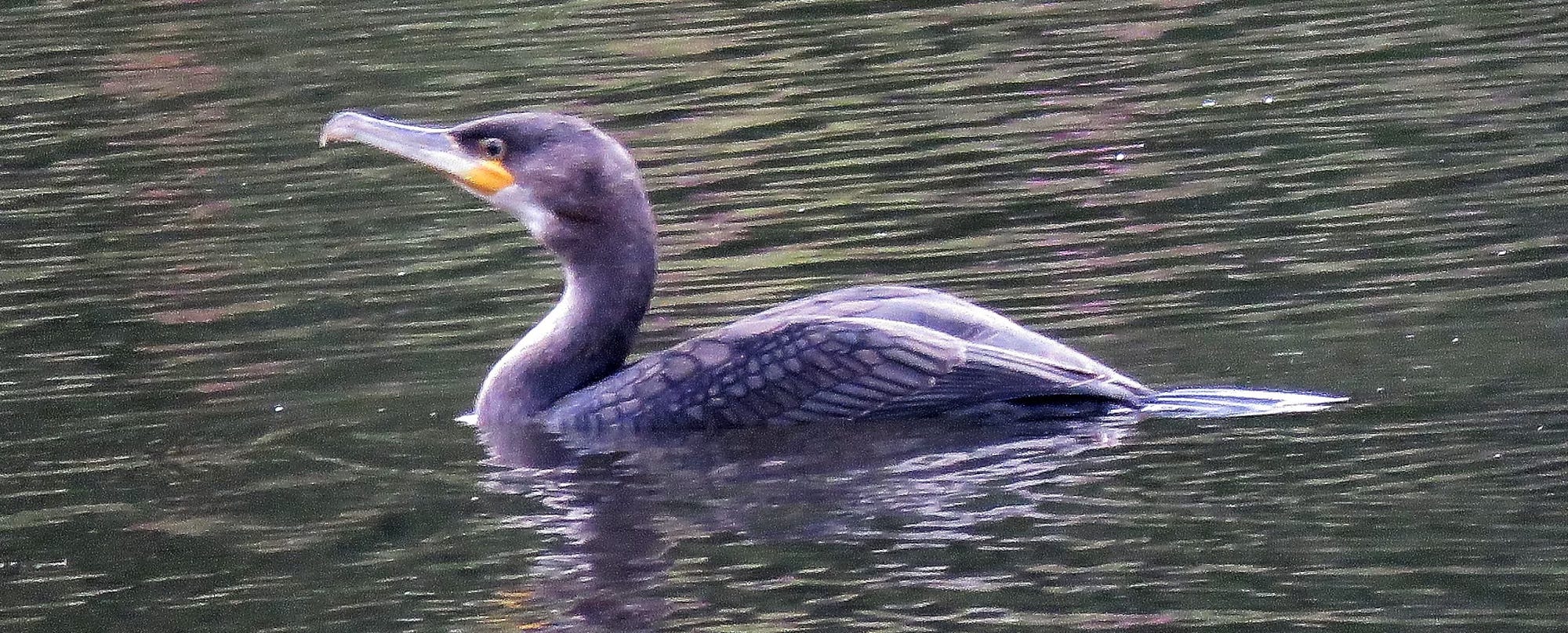
The council tell me there have been White-clawed Crayfish, Water Vole and Palmate Newts here in the past, along with Daubenton’s Bats, Brown Trout, Cinnabar Moths, and Common Toads, along with Pete’s 74 bird species.
Tyzack’s Dam is already a listed Local Wildlife Site, and the council say “the restoration work is expected to support its return to positive conservation management.”
All well and good, says Pete. He hopes it all happens. But why not take the obvious step of actually making it a designated nature reserve?
“A restored Tyzack’s Dam has the potential to be a superb little nature reserve visible to all without any disturbance to species that could recolonise the site,” he wrote to the council.
Wildlife on the dam is protected by a wall on the road, a fence along most of the park, and railings on the east, but locals heading out along Abbeydale Road would benefit from noticeboards and viewing points to help them watch and understand the hidden treasure on their doorstep, Pete says.
At present, plants and birds and insects have taken nature recovery very seriously on Tyzack’s Dam.
As the water returns this autumn, in time for roosting gulls, feeding herons and maybe even a long lost loon, will the centuries old lake on the Sheaf become a real home for nature recovery? Pete, and Bill’s Mother’s, and any remaining Barn Swallows, will be watching.
This post was amended on Monday 7th after a misunderstanding about an Arctic Loon, also known as a Black-throated Diver. Pete corrected me that this bird had been recorded here, but not seen by him as he wasn’t birdwatching in 1938.
Out There News
September Explorers - The annual Sheffield Walking Festival and Heritage Open Days share several events this year, with walks through local woods, parklands and unlikely urban locations, along with history talks and tours ranging from the Roman Ridge to Park Hill’s Streets In The Sky. The festivals run from 11th to 20th September, and booking your (usually) free place is preferred.
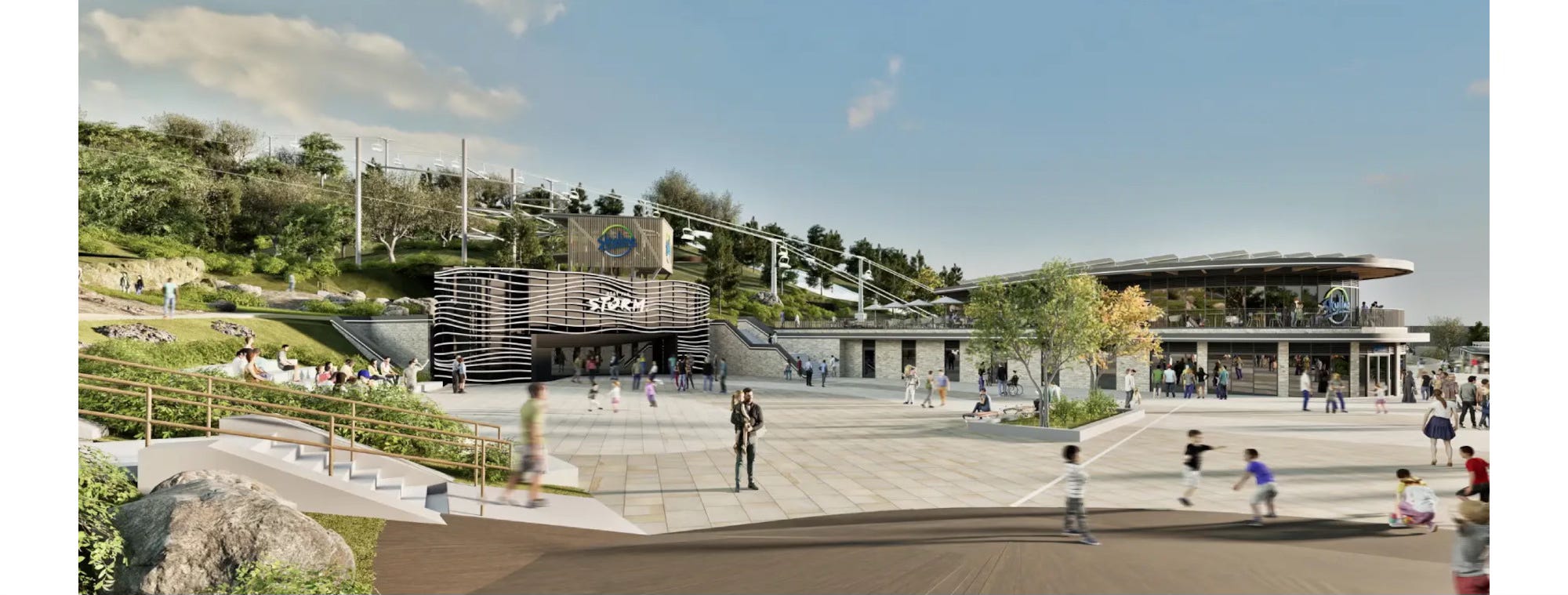
Reach For The Skyline - The fabled return of extreme downhill entertainment to Parkwood Springs seems close, with a consultation launched this week by the Skyline Enterprises organisation - ‘global leaders in adventure tourism’, they say.
Members of local voluntary groups say Skyline have said many of the right things about access and preservation of the wildlife around the site, but letting them know your thoughts can surely help hold them to their word.
“We’re committed to keeping the site open and accessible to everyone, retaining existing public footpaths and cycle trails wherever possible,” they say in their documentation, adding that if any minor route alterations are required they’ll be “delivered to an equivalent or improved standard.”
Worth noting, however, that this headline commercial development still only comprises 10% of the increasingly wild mile-long landscape developing on the hillside between Parkwood Springs and Wardsend Cemetery.
The consultation runs to 20th September, with drop in events at Heist Brew Co. on Wednesday (9th) and Shirecliffe Community Centre on Thursday (10th).
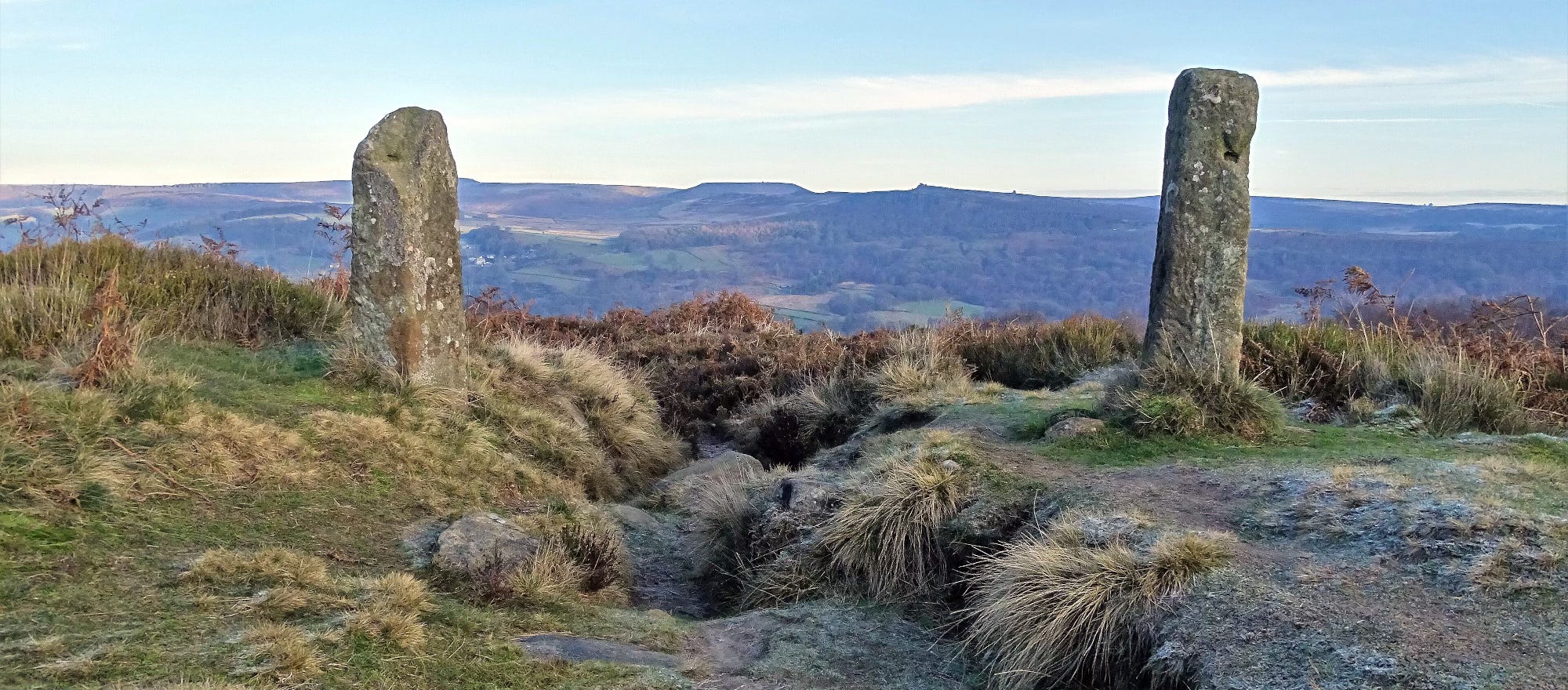
Eyam Moor - The huge moor around Sir William Hill above Grindleford has been taken over by the ever-ambitious Derbyshire Wildlife Trust.
A former mining area and grouse moor, the 600 acre Eyam Moor will now be one of the largest “landscape-scale nature recovery” sites in the region, says the trust.
Rewilding the ground and vegetation will also hold more water, reducing flooding and the risk of wildfires, they say, adding that nature will “take the lead” in the moor’s recovery. (I hope to have more from Derbyshire Wildlife Trust soon.)
Paul Besley and John Batley
I learned that two very different people of the outdoors passed away this week.
We covered local writer Paul Besley earlier this year, when Dr Jo Maher spoke to him for our book club here. After writing a Substack about his life with a terminal illness, Paul sent his last post early this week. Poet Helen Mort also posted about a writer of “eloquence with zero bullshit” .
I didn’t know Paul myself, but during a year or two in uniform as a youth, I knew scout leader and outdoorsman John Batley, who died in August. John was easy going and modest, and worked for much of his spare time helping young and disadvantaged people in South Yorkshire.
Going about their lives in different ways, both these men had inspired people to love, and just as importantly respect, the wild places around us.
More What’s On Out There (from Sunday 6th September)
A tiny selection from our (regularly updated) What’s On Out There news and listings post. Full version for full members, preview version for all at the link above.
Sun 6th - Wadsley Commoners muck in morning
Mon 7th - SRWT Volunteering - Sunny Bank walk & talk
Weds 9th - Sheffield Ramblers Walks - Penistone & Royd Moor (10.5m)
Thurs 10th - Green City Action Grimesthorpe community allotment
Sat 12th - Sheffield Organic Growers Open Day
Sat 12th - Wardsend Cemetery conservation morning
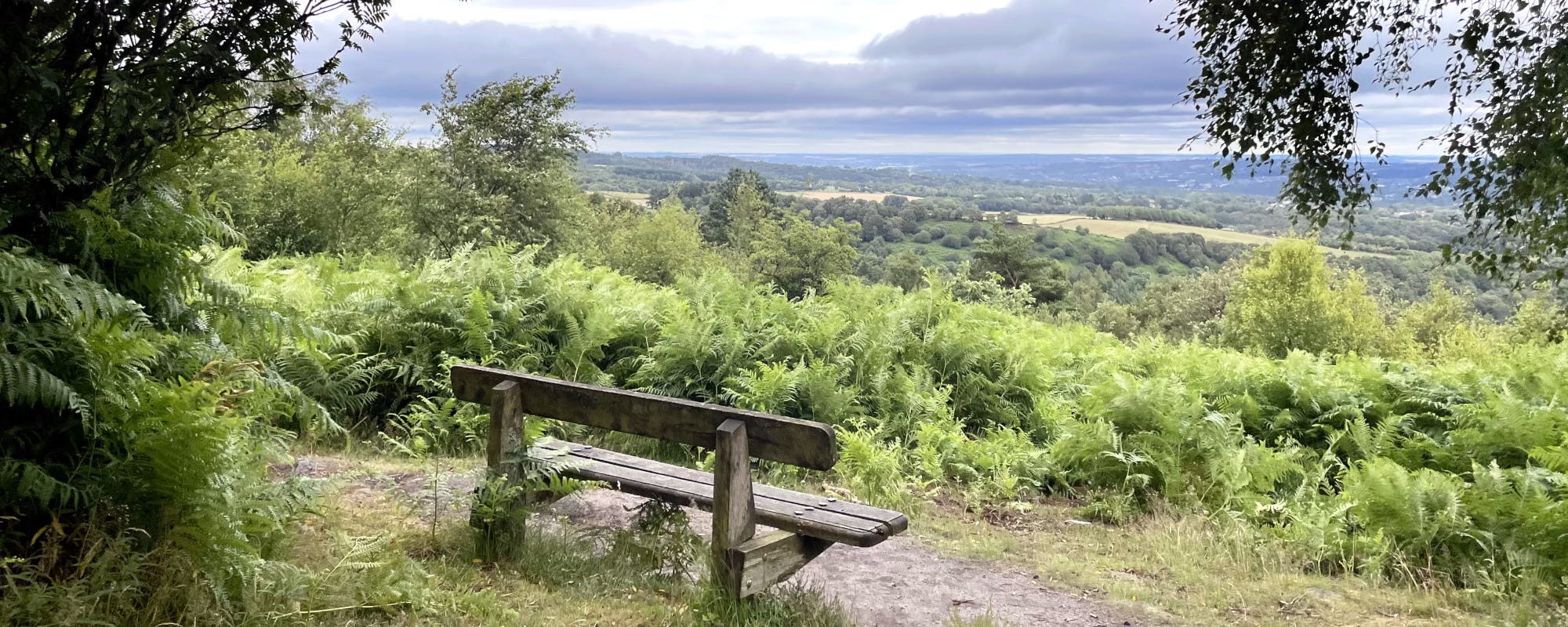
Secret Seating 21
Sorry, mystery bench fans, it’s been a while since we presented a Where is that Secret Seat? puzzle. Congratulations to sharp-eyed reader John Harker who nailed SS20 in minutes, despite my assumption the gleaming wooden bench near Woodhouse Washlands was so new it would be near impossible to place.
Today’s more established secret seat should be easier - a virtual gold medal awaits the first reader to identify its precise location in the comments section below.
If you’ve enjoyed this post, it really helps us if you can share it with your mates.
We can only cover the costs of our social enterprise publication thanks to our lovely 350+ paying readers. But now we’re publishing Commoner’s Muck too we’re at full stretch, so if you’re able to help us, you can upgrade below for the cost of a posh coffee a month (or less if you go annual). Thanks for reading.
Thank you for this post David - what a wonderful variety of birds, and certainly other wildlife there is at the lake behind Tyzack’s Dam! We visited the Industrial Hamlet last year, and found it really interesting - I would encourage everyone to visit (although not all at once….).
In regards to Parkwood Springs . The "10%" that the Skylin (luge) company speak of includes some of the most richly diverse habitat ecosystems they plan to 'develop' upon. The other 90% we get to keep is somewhat lower quality land still recovering from being landfill for decades. Locals who walk, cycle, play sports and forage on that land are NOT happy with the land grab. The £19 million awarded to uplift the Shirecliffe area is mostly being spent on an access road to benefit a multinational company NOT local business. Sheffield City Council selling the poorer side of Sheffield down the river. Bolehills or Lady Cannings areas would be in uproar if they were doing this over there. We say stick to the original ski village site.