


Morning. We have warm fish and hot butterflies today, with challenges for Sheffield’s wild creatures this extreme August, along with news from the Manor, where park lovers pitched in to start the recovery after a grass fire, and historians found graphic signs of the past in the sun-scorched grass.
There’s also out there news of a tree-planting fruit machine, and a mysterious treasure chest salvaged from the River Sheaf.
And I hope you enjoyed the first post from our sister publication, Commoner’s Muck, earlier this week - you can find the beginnings of our new magazine in the link above every post.
Commoner’s Muck will cover the thousands of volunteers and hundreds of magnificent local organisations working for all of us, and will slowly build, we hope, into a feel good read and handy resource for everyone who cares about the Outdoor City and northern Peak District.
So please do spread the word about our social enterprise publishing empire to anyone and everyone.

Fire And Flood
This week, finally, it’s been raining. Grass became green, patches of mud appeared for a few hours, leaves fell from the scratchy trees and people posted about the smell of autumn in the air.
And then the sky closed in, the storms crashed down and the flood alerts began, with the River Sheaf rising onto Abbeydale Road and River Don onto Upwell Street.
We’ve seen horrific scenes across the world this week, bringing home the effects of climate turmoil. At the time of writing, we’re still waiting for a clear response from our own government. Here in Sheffield we’ve had moor and grass fires, storms and flooding in a single month. I spoke to naturalists and conservationists about how some of our fellow creatures are coping.
A couple of weeks ago, I toured Norfolk Park with Ben Keywood of Sheffield & Rotherham Wildlife Trust, looking for any patches of scorched earth that might still be green enough to host butterflies like Meadow Browns and Ringlets.
And in the heat of a family wildlife day at Wardsend Cemetery, Matt Duffy of Don Catchment Rivers Trust had to call off his usual river fish identification sessions because the River Don was too hot.
I asked Matt and Ben how the wildlife they watch might cope, or not, with this month’s fire and floods.
Extreme Fish
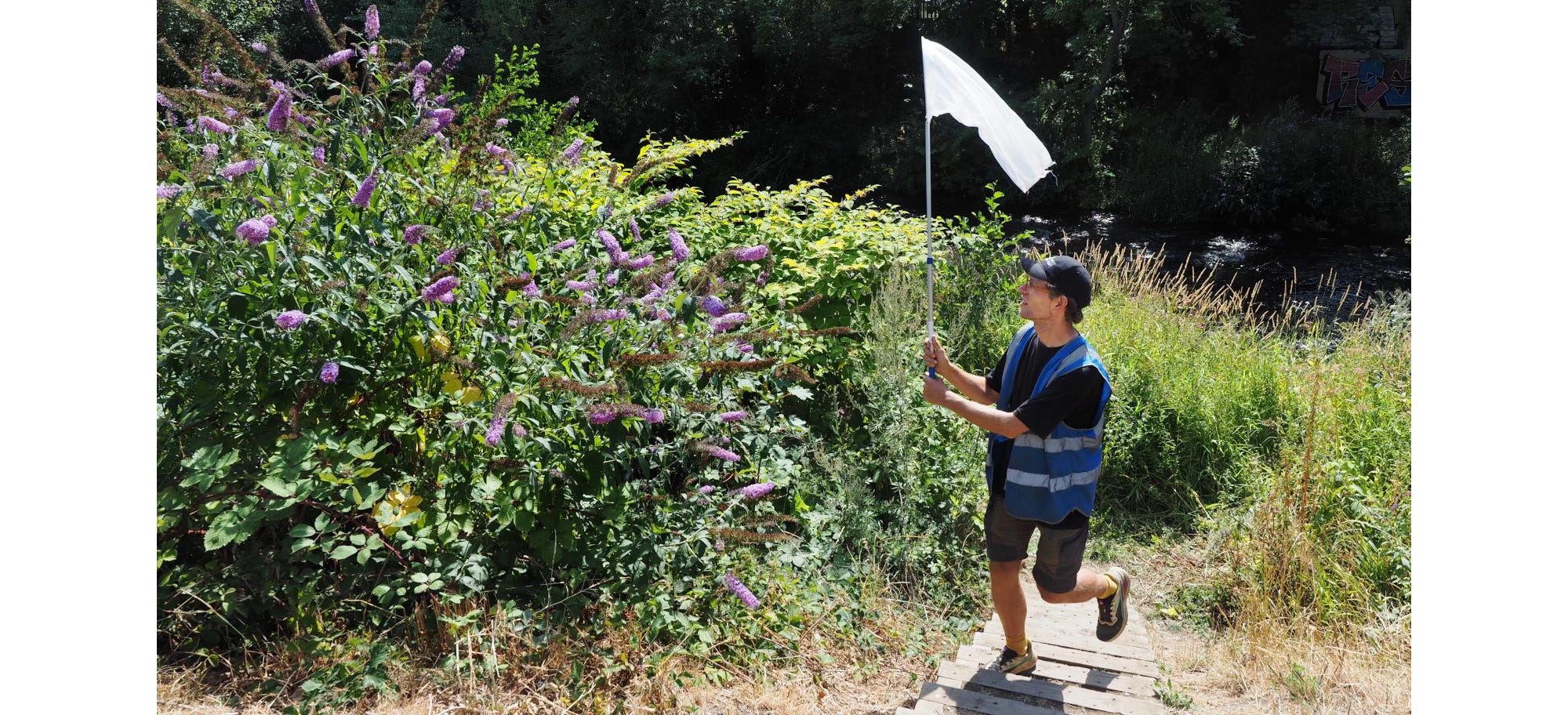
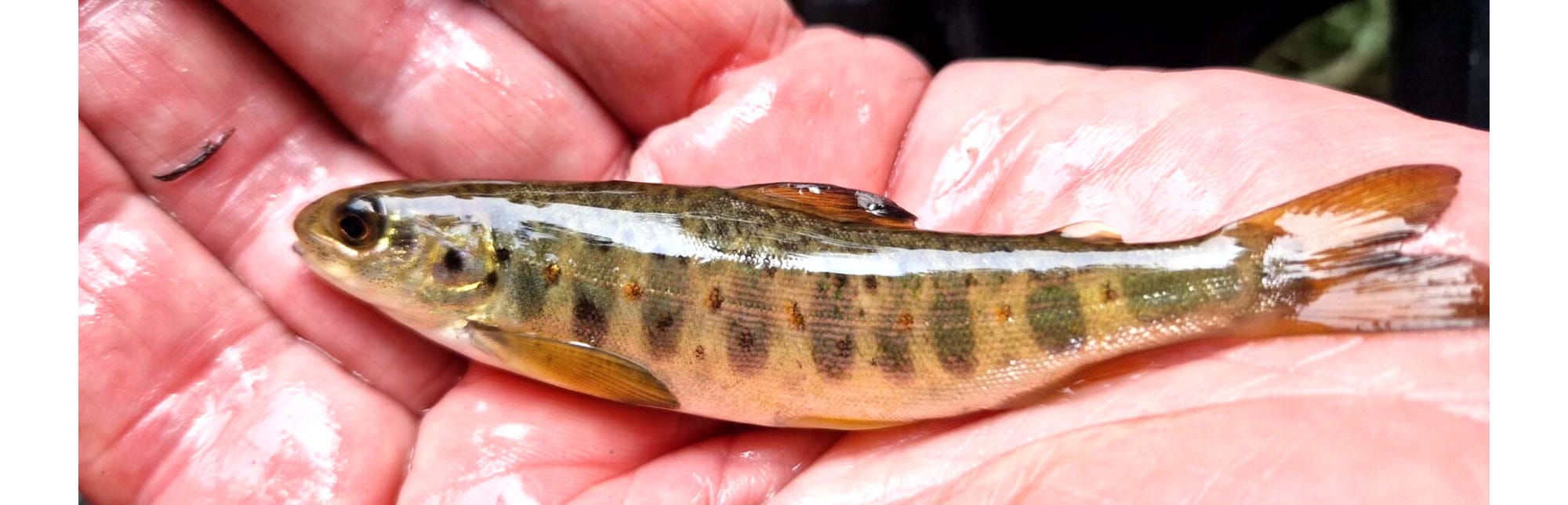
This time last year, Matt Duffy and his colleagues caught Sheffield’s first baby salmon for 200 years in a quiet corner of the Don at Neepsend. They’d been electrofishing, a harmless method to temporarily stun nearby river fish in cold water so they can be identified. It’s the only practical way to monitor the species present, he explained. But this summer’s electrofishing was cancelled, because the temperature of the River Don (16 degrees in early August) was far too hot to do it safely.
Sandy was the name Matt chose for the now famous young salmon (known as a parr) he and his team found last August. This summer, Sandy and fellow fish would have been sheltering by riverside vegetation, and keeping to the cooler currents, Matt explained. But checking to see if Sandy was still here, or if Sandy had a few brother and sister salmon swimming around Neepsend, was put on hold.
When this week’s rainstorms arrived, there’d be new challenges.
In sudden heavy rain after dry spells, the first thing that happens is for all the roadway pollution to get washed into rivers, said Matt. And there’ll be run off from CSOs too, he added. (Officially, CSO means Combined Sewer Overflows, although Yorkshire Water choose to call them Combined Storm Overflows).
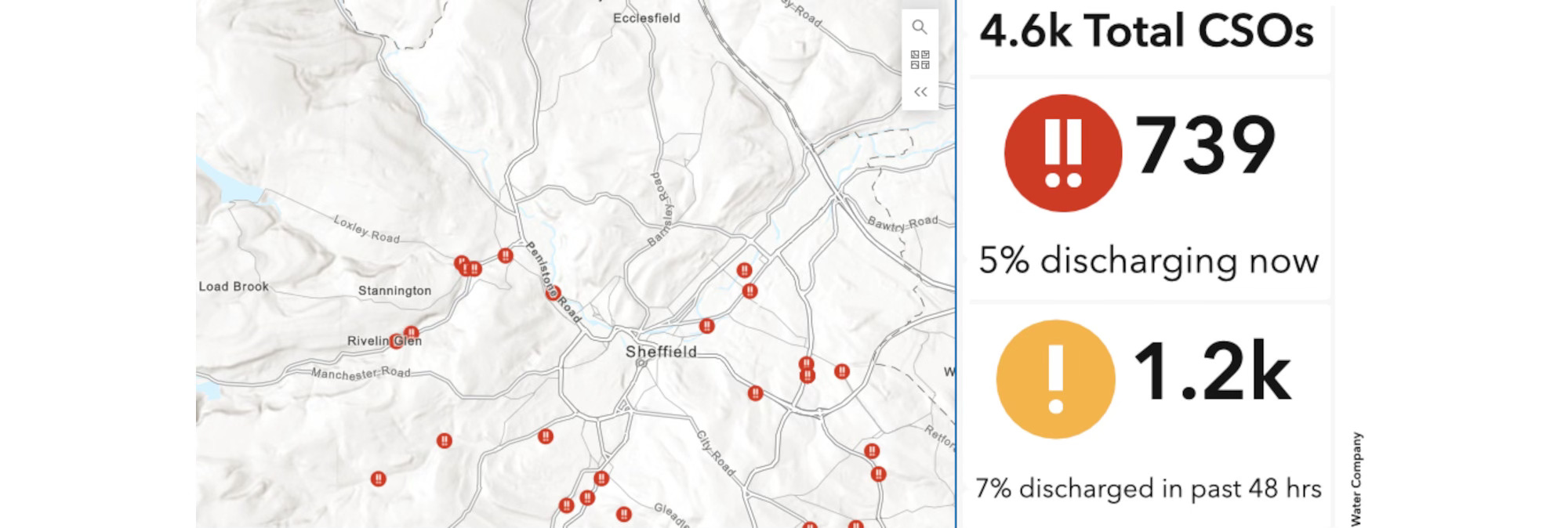
Sure enough, in the crashing rain of Thursday, dozens of our CSOs were leaking sewage into all of our rivers, and many of our brooks.
The next sudden deluge danger for young river fish is to get swept away by that surge in current - some young river fish end up in the sea after very heavy rainfall, where they can’t survive, says Matt. But ensuring there are rocks and branches in a river helps provide protection, where young fish like Sandy can take shelter from the storm.
If the rains calm down, there’s a chance of another monitoring attempt this year. If not, Matt and his colleagues might just find Sandy again next summer, weather, pollution, and sewage overflows permitting.
The River Trusts have their own online map of CSO discharges, aptly named Is My River Fit To Play In? Here’s part of the map after the storms of Thursday this week, showing Sheffield and the discharges related to Yorkshire Water and Severn Trent at the time.
Extreme Butterflies
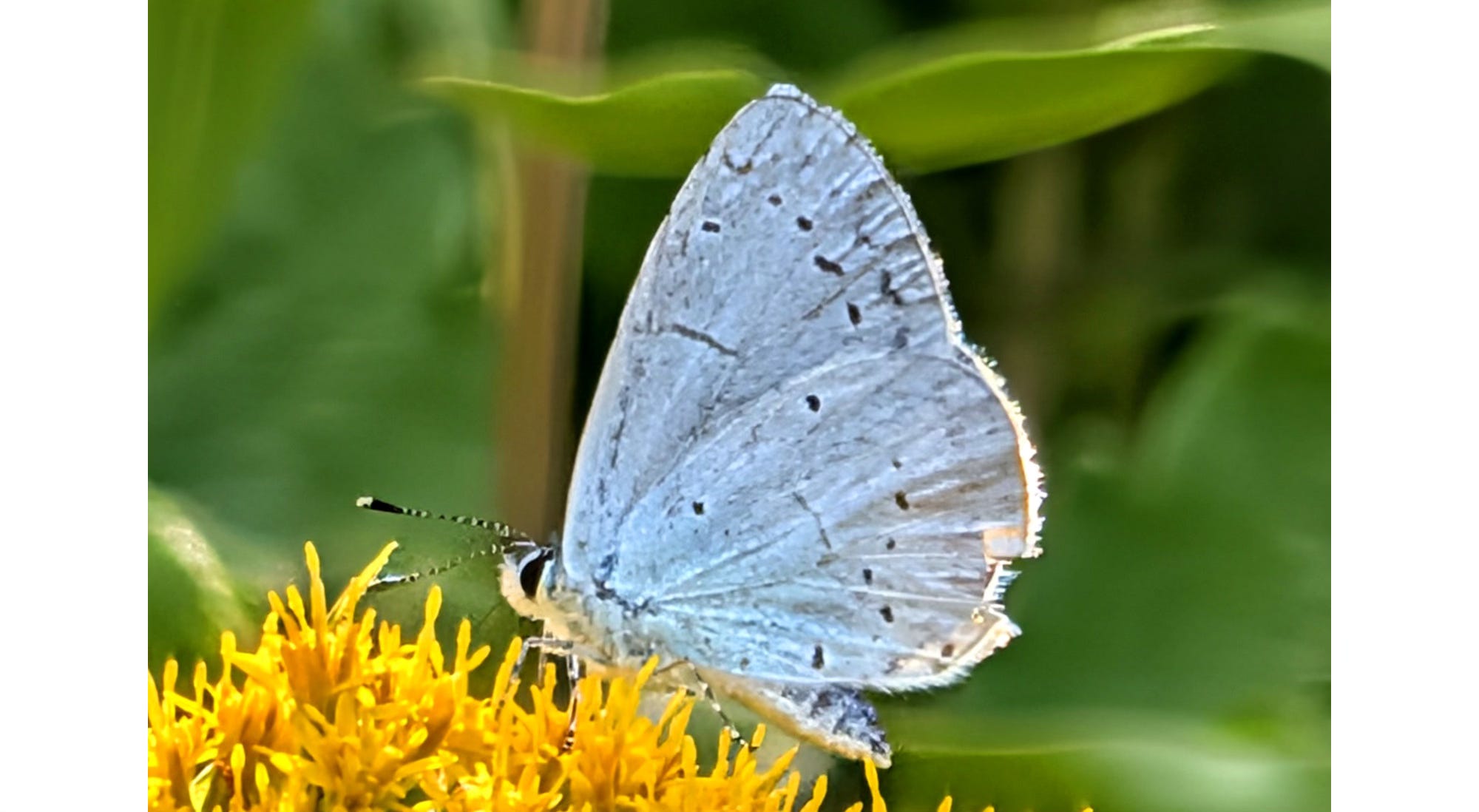
Many of us noticed butterflies everywhere this summer. Yes, it seemed there were more butterflies, says Ben Keywood. But most are the same few species. It’s been a good year for some, and bad for others.
Common and Holly Blues and the various white butterflies have done well. Caterpillars of the blues eat drought resistant plants like holly and ivy, while Large, Small and Green-veined White caterpillars can manage a variety of plants and can grow to have several broods of butterflies a year. So we’ve seen a lot of them.
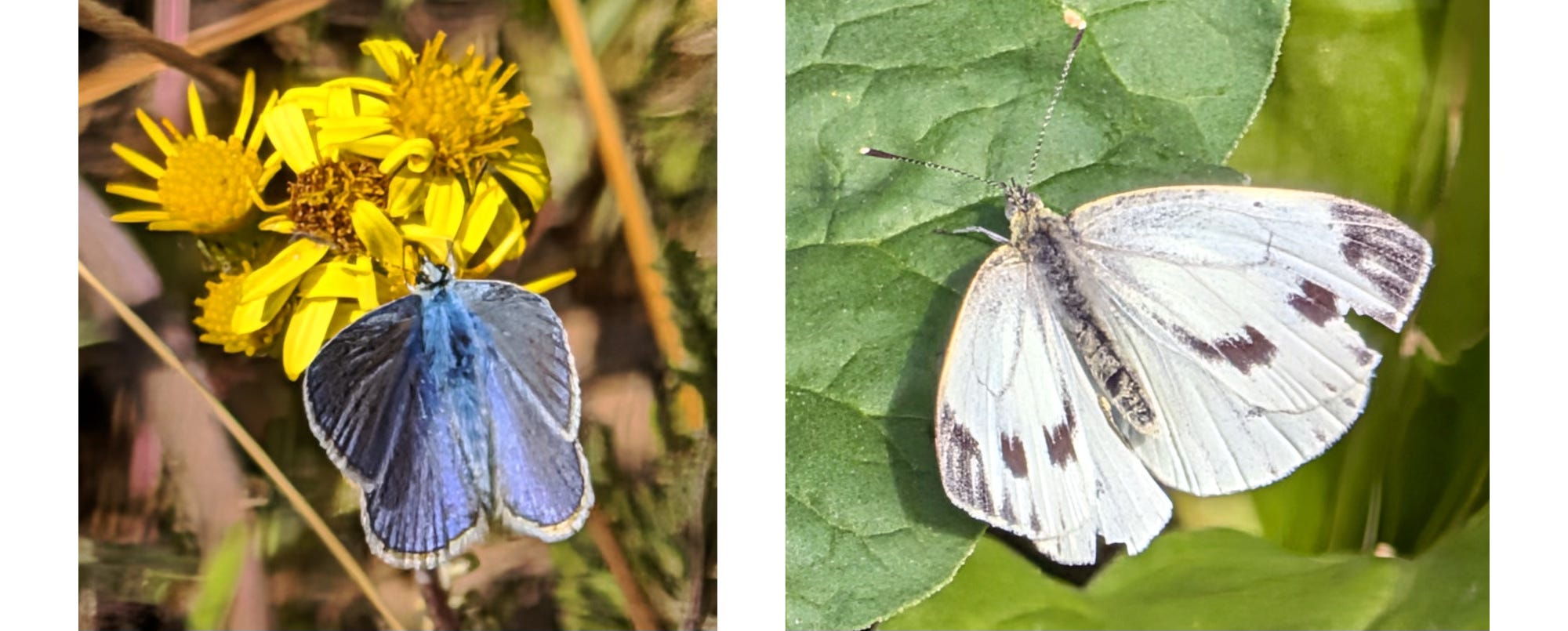
We’ve also had plenty of Painted Ladies, Red Admirals and Clouded Yellows brought here by warm winds from places like the Azores, along with some of those prolific white butterflies too.
But woodland edge butterflies have struggled. “They like it cool,” Ben says. Speckled Woods, Meadow Browns and Ringlets prefer damper plants like green grasses and nettles, so any of their caterpillars that survive the heat may give up for the year and try to burrow into the ground early to overwinter, if the ground isn’t too dry, and they’ve eaten enough to survive until the spring.
Species like Peacocks are simply moving uphill if they can’t find cool patches in the woods. In Eastern Europe, Peacocks thrive in the Carpathian Mountains, says Ben, while here many seem to be moving from hot Sheffield gardens up to the White and Dark Peak.
After watching blue and white butterflies flutter round the dry trees of Norfolk Park, we find a patch of damp woodland edge, with still green grass and scrubby docks, thistles and nettles, and on cue a Meadow Brown flutters by.
Planting flowers for nectar, along with deep-rooted plants like knapweeds in your garden or allotment will help butterflies, says Ben, and allowing grass and wildflowers to grow in damp or shady corners will keep somewhere cool enough for the more discerning butterfly.
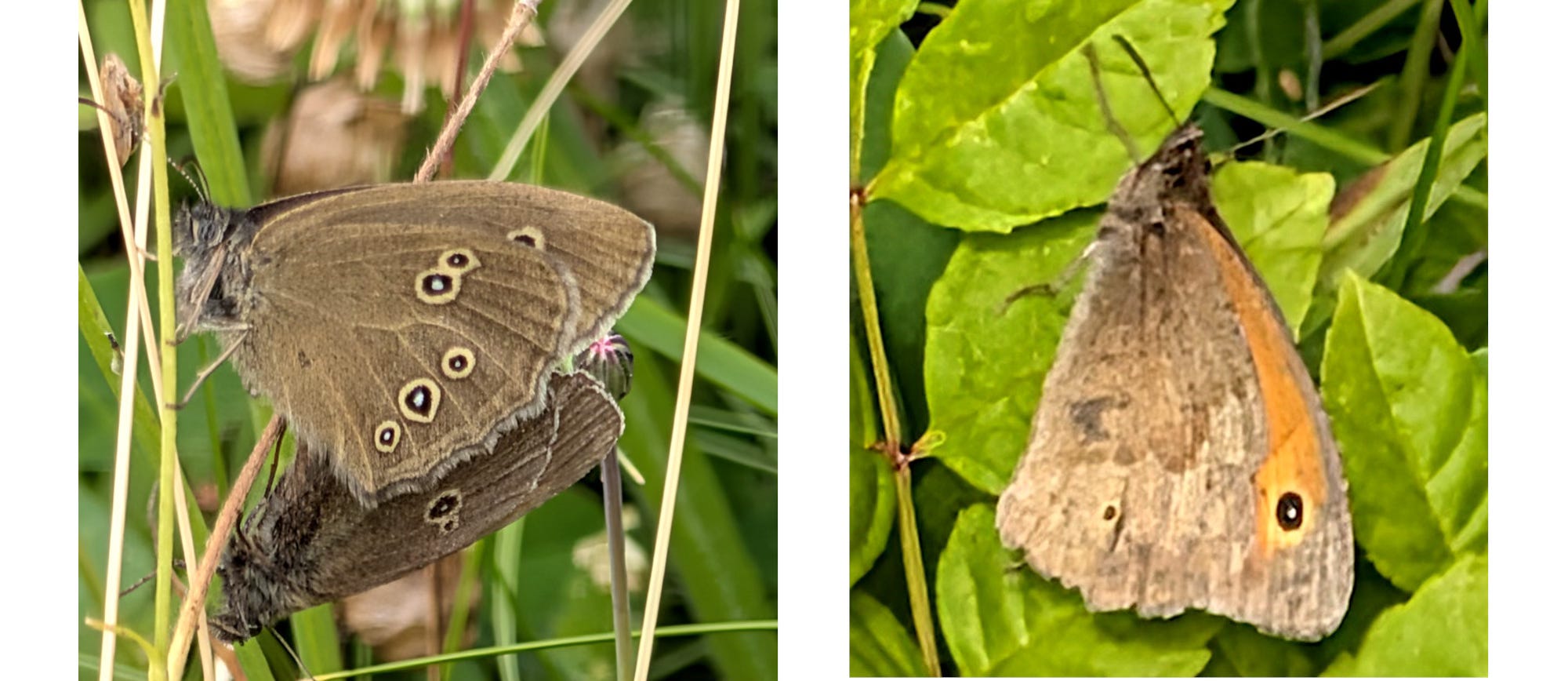
This week Ben added that butterflies can generally cope with sudden rain, sheltering in dense bushes, tree bark or in your outhouse wall.
The rain will allow more caterpillars to burrow down for the winter, and a few caterpillars, such as Small Copper and Common Blue, can even survive being drenched in water for a few hours. Many butterflies (and their caterpillars and pupae) are built to cope with English rainfall, but new weather records every summer?
This year’s survivors will soon be hunkering down, and trying to cope through whatever the winter brings.
Out There News
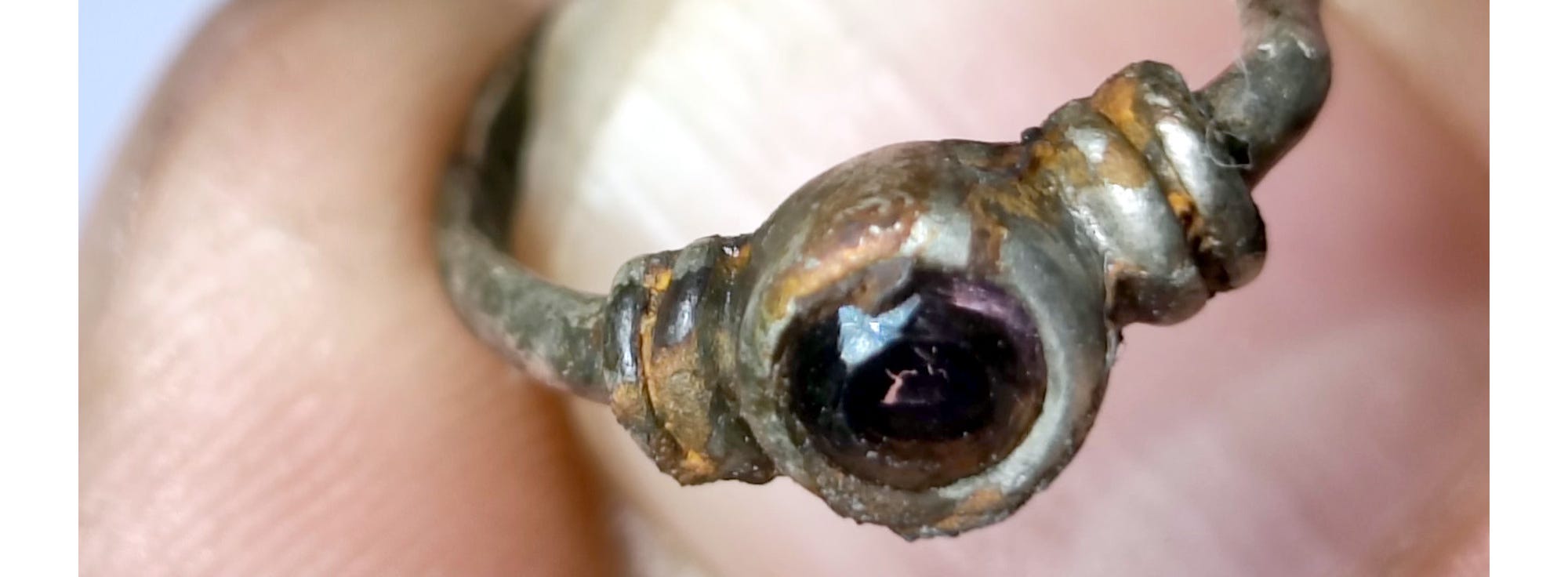
Buried Treasure - This year’s tours of our city centre river tunnels have salvaged a mystery, hidden for generations in an underwater treasure chest.
During one of the Sheaf & Porter Rivers Trust popular underground tours of the Sheaf and Porter, guides Anthony Wood and John Clarke found a strange box, full of assorted cutlery from one of the nearby works, embedded in some kind of resin. Amongst the knives, they found a small silver ring, an engagement ring perhaps.
Was it hidden for safekeeping by a suitor waiting to pop the question? Did the couple fall out, with the ring forgotten? The Trust want to know, so they’re asking our readers to tell them (info@sheafportertrust.org) of any family legends involving a ring lost at work long ago, and an underwater treasure chest.
“It’s extraordinary that this tiny personal item has survived almost undamaged for decades on the river bed,” said Anthony Wood. “And it’s even more extraordinary that it’s now been found.”
The Sheaf & Porter underground river tours continue until the end of September.
Fruit Tree Machine - Spurning the horrors of digital gambling, community campaigner Nicola Gilbert has joined the analogue movement to bring a cardboard box fruit machine to Bank Holiday Monday. Humans in cardboard boxes will randomly generate an apple, orange or banana for a small fee, with a jackpot prize for three matching fruits.
The event is on Monday afternoon at the Family Fun Day at the Norfolk Arms, Ringinglow, with all fruit machine profits going to the Community Tree Fundraiser for new street trees in Burngreave and Bents Green, supported by Millhouses, Ecclesall & Carterknowle Community Group, High Storrs Environment Group, Green City Action, STAG, Sheffield Council and The Church at Bents Green.
“It’s silly and fun, just right for the last day of the school holidays,” said Nicola.
Heat Effects
The summer heat brought out several sides of the Manor estate this month: a calamitous fire, a huge community response, and a hot historical revelation.
A fire on August 13th burned across a large expanse of grass and meadows in the lower northern edge of the park, but a week later almost 100 local people turned out to help clear up some of the debris left by the fire, including litter left on the ground after the scrub was burned down.
Managers of the park, Green Estate, said some of the park pathways acted as fire breaks, helping South Yorkshire Fire & Rescue to quell the flames before they spread away from the park. They added that the nature of the meadow and scrub will allow the landscape of the park to regrow, in time.
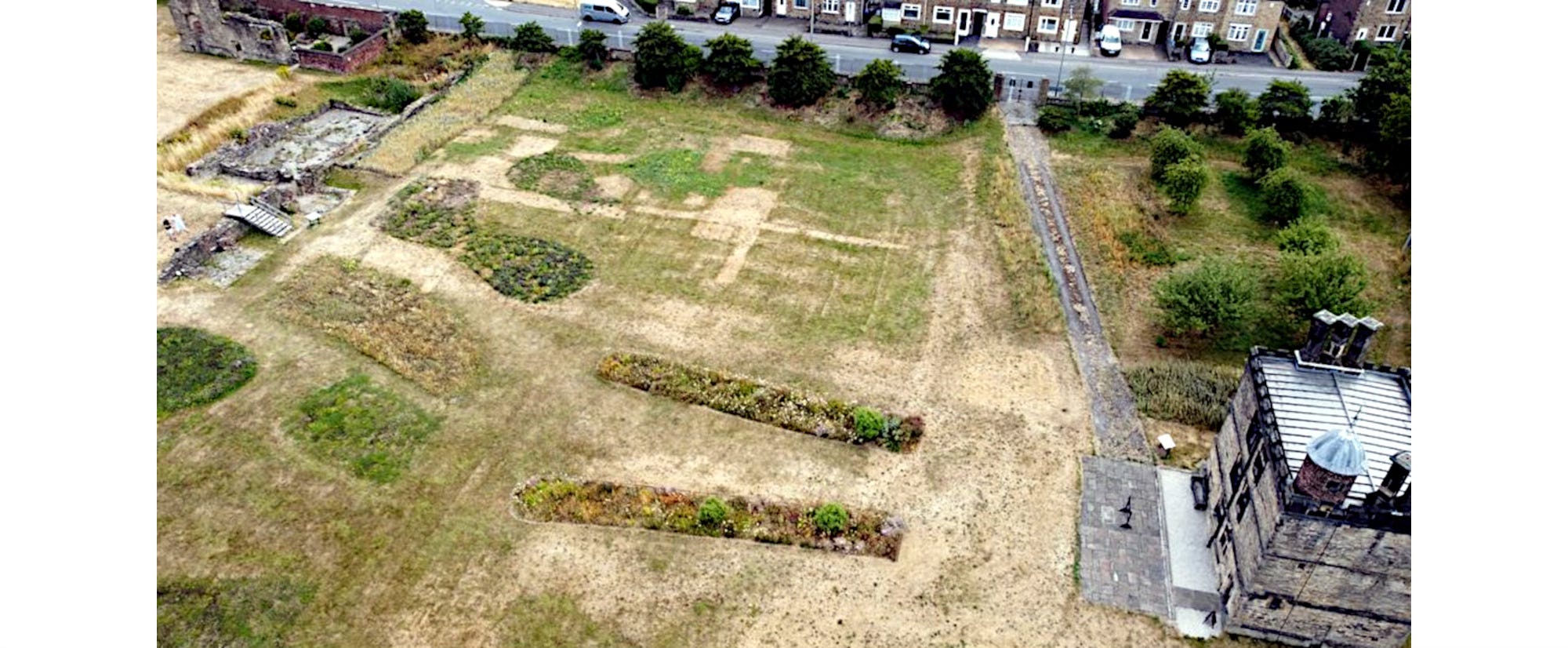
Meanwhile, within sight of the blackened parkland, staff announced just after the fire that the sun-dried grass around Manor Lodge, along with drone footage from videographer Jon Davies, had revealed clear foundation marks of the original medieval hunting lodge of the old Sheffield Deer Park, predating the existing sixteenth century Turret House by well over 100 years.
Digs by Sheffield City Museums 50-60 years ago uncovered signs of the old building, but the marks revealed by the sun of 2026 showed clear outlines of walls and towers and a Tudor road across the site.
Historian Dr Hannah Wallace of Green Estate said the findings helped share what life was like around Manor Lodge over the last 600 years.
“But more and more we are seeing the effects of extreme weather on our historic buildings,” she said. Extreme heat is affecting the Turret House plasterwork, and the exposed walls are prone to damage by heavy rainfall, she explained.
“Preservation of this amazing site is incredibly important to the Green Estate, and we’re exploring the best ways to do this as our climate changes.”
Roz Davies, CEO of Green Estate, praised the turnout to help clear the fire debris. “Manor Fields Park is a national demonstrator of urban resilience,” she said, adding that her staff and other local agencies including the local MASKK kids club and Friends of Manor Fields Park will be working over the next months and years to renew the damaged area of the park. “It will recover,” she said.
Manor Lodge is hosting a family history day on Sunday 6th September (Tickets £6/£10).
More What’s On Out There (from Sunday 30th August)
A tiny selection from our (regularly updated) What’s On Out There news and listings post. Full version for full members, preview (& this week) for all at the link above.
Sun 30th - Friends of Whirlow Brook Park - Sounds of Summer concert
Tues 1st September - SRWT Volunteering - Wyming Brook
Weds 2nd - Longshaw Social Walk
Thurs 3rd - SRWT Volunteering - Moss Valley + Moss Valley walk & talk
Fri 4th - Great Longstone Chase fell race
Sat 5th - CycleBoost cycle training - confidence & learn to ride, Greenhill Park
If you’ve enjoyed this post, it really helps us if you can share it with your mates.
And thanks to all 350+ subscribers who sub us a mere £4 a month to make it possible to publish both It’s Looking A Bit Black Over Bill’s Mother’s and Commoner’s Muck.
Our lovely paying readers are quite simply the only way we can cover our costs. If you’d like to help for the cost of a posh coffee a month (or less if you go annual), you can upgrade below. Thanks for reading.