



Morning. It’s time to take advantage of the extra light when you wake up for the next week or two. (Did you or your A.I. remember to put the clocks back?)
Look out for geese honking across the early sky, or late foxes in the garden. And if you go for a dawn stroll this time next year, might you catch a nocturnal Eurasian Beaver getting ready for bed? (See our 🦫 update below).
A slow and inspiring feature about a walk from Edale to Hope today, on a route trod by coffin bearers and digital map makers. I join two Slow Ways stalwarts to learn how a national easy going travel network is being built by volunteers.
Do share this post with anyone and everyone: the more readers we get, the more we can do. And please remember this publication has no mystery benefactors or data scraping algorithms to pay the bills. It’s just you, our readers, who we ask to join in once you decide if you like us, for the cost of a pint of beer a month.
You can get your round in below.
The Old Ways
Damp hillside paths, knotted with roots and slaked with mud, remind me of those long days five years ago when the only thing to do was take a walk with your family and listen to the evening Covid reports.
During the lockdown years, I found the off the beaten tracks, as I had to stay away from strangers. And when you discovered an old hidden path high on a valley hillside, you had time to see the old stones and steps from centuries ago, and reflect on the people who passed that way to work, to go to church, or to visit friends.
What was the nature of our lockdown walking? Not just because Boris told us, but to try and stay sane and healthy, and maybe, simply to get out of the house. And if we were lucky enough not to be working our guts out in the NHS or for another essential service, we had plenty of time to do it.
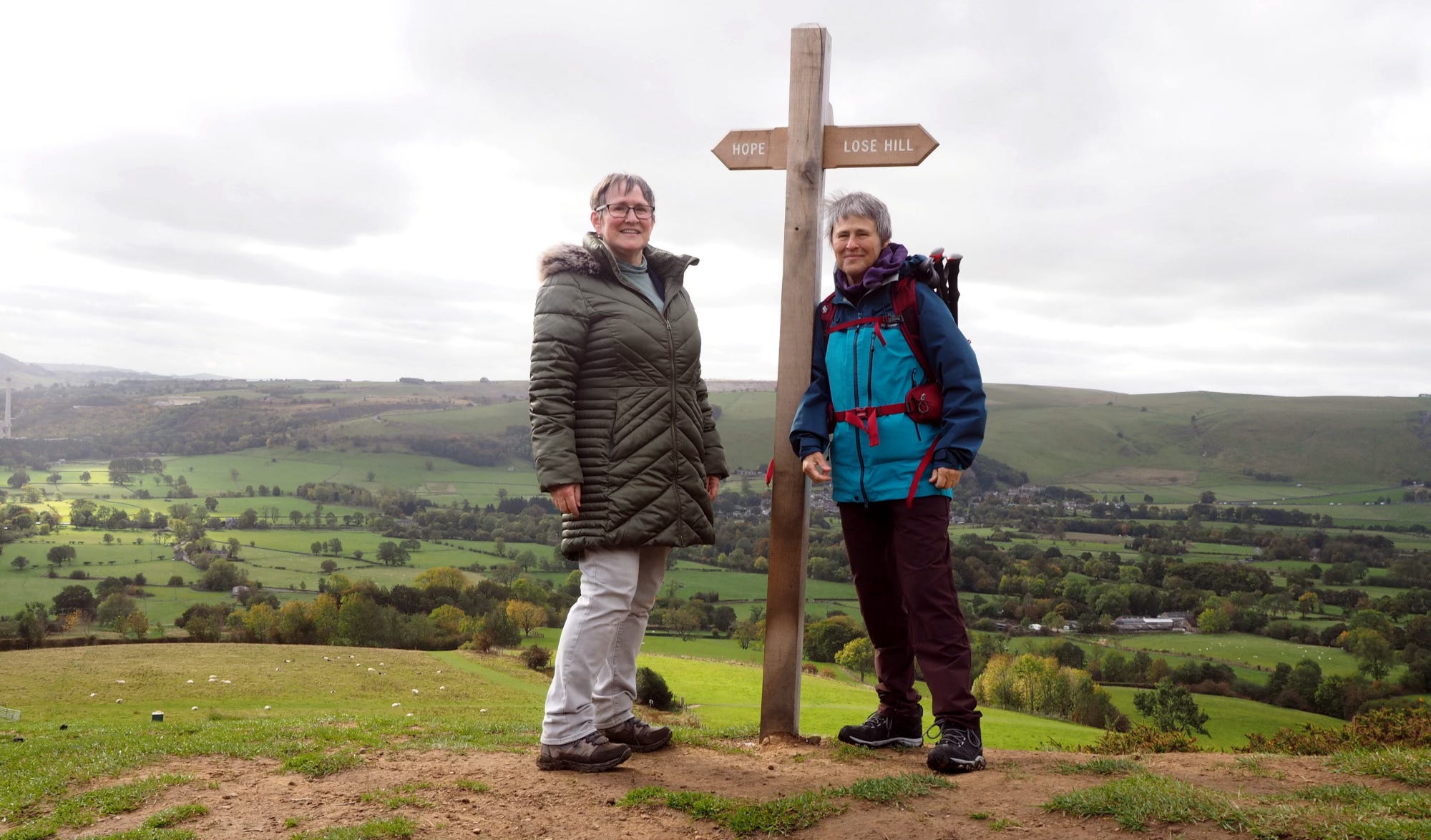
Mary Austin put her lockdown walking to use, like hundreds of others around the UK, to help launch a network of walking routes for the new world, after the pandemic finally retreated.
“I love maps,” she tells me in a cafe in Hope, halfway through a Slow Ways route review day, for which she got up just after 5a.m. in order to catch a train to the Hope Valley from her home near Lancaster.
“I heard about Slow Ways on Radio 4 during lockdown, and walking and planning routes sounded ideal to me,” she says.
Geographer Dan Raven-Ellison launched Slow Ways in early 2020, and instead of pausing at the outbreak of Covid 19, he realised there were dozens, maybe even hundreds, of people like Mary who wanted to put their lockdown walking to good use.
After a ‘hack day’ with the Ordnance Survey and 70 volunteers, and subsequent excited Zoom meetings, the first versions of the Slow Ways mapping website and app were launched, so enthusiasts could head off and map their chosen route between two settlements. Hundreds of people like Mary joined in, devising thousands of routes, that might one day be followed by millions of fellow travellers.
After five years of voluntary mapping and route checking, the network now has over 85,000 miles of routes, with a big push now for more reviewers to go out and check their local Slow Ways. You can download the app (or visit online) and find a route that needs more love (three positive reviews means the route becomes a verified route on the Slow Ways network).
The social enterprise raised £100,000 in a Crowdfunder this summer, which will pay for better route collating software, with layering so people can choose routes that will suit them: travelling with a buggy or wheelchair, for example, or on easier surfaces, or on a horse or a bike.
The loose structure of enthusiastic volunteers seems very much of our resourceful cash poor times. Some people do the mapping, some do the checking and reviewing, some just go out and tell us if they enjoyed the walk, and the Slow Ways network has gradually woven itself together because so many people love it.
I spoke to Dan Raven-Ellison earlier this year. He’ll readily spend several minutes telling you why walking is so much more than just taking a long time getting from A to B: freedom, conversation, discovery, for example, as well as all the health and mental health stuff.
“Walking enriches lives, connecting people to nature, communities, and each other,” he wrote in one of his publicity pieces.
With the new software and mapping tools (due next year) he anticipates getting on for a million miles of routes available for you and I to use as we see fit. “For the everyday, and the epic,” he says, meaning you can use the network to get to your next meeting or to plan an expedition across the country.
I asked him what’s happening around Sheffield, and he introduced Mary and her Sheffield-based sister Susan, who are reviewing routes together.
So far Mary has checked over 500 routes, and walked over 3,000 miles in the process. Susan has just helped out, she tells me, but they’re both enthusiastic about the whole idea when we arrive at Edale station with route EDAHAT3 before us.
(Every route is usually named after the first three letters of the two destinations, with numbers for alternative routes with the same start and end points. EDAHAT3 is the third route between Edale and Hathersage. The westernmost point usually comes first, Mary says).
We head downhill as Mary tells me of the migrating geese she heard on her walk to the station early that morning, and we watch a Dipper bobbing in the River Noe, then head up a farm track I’d never travelled before.
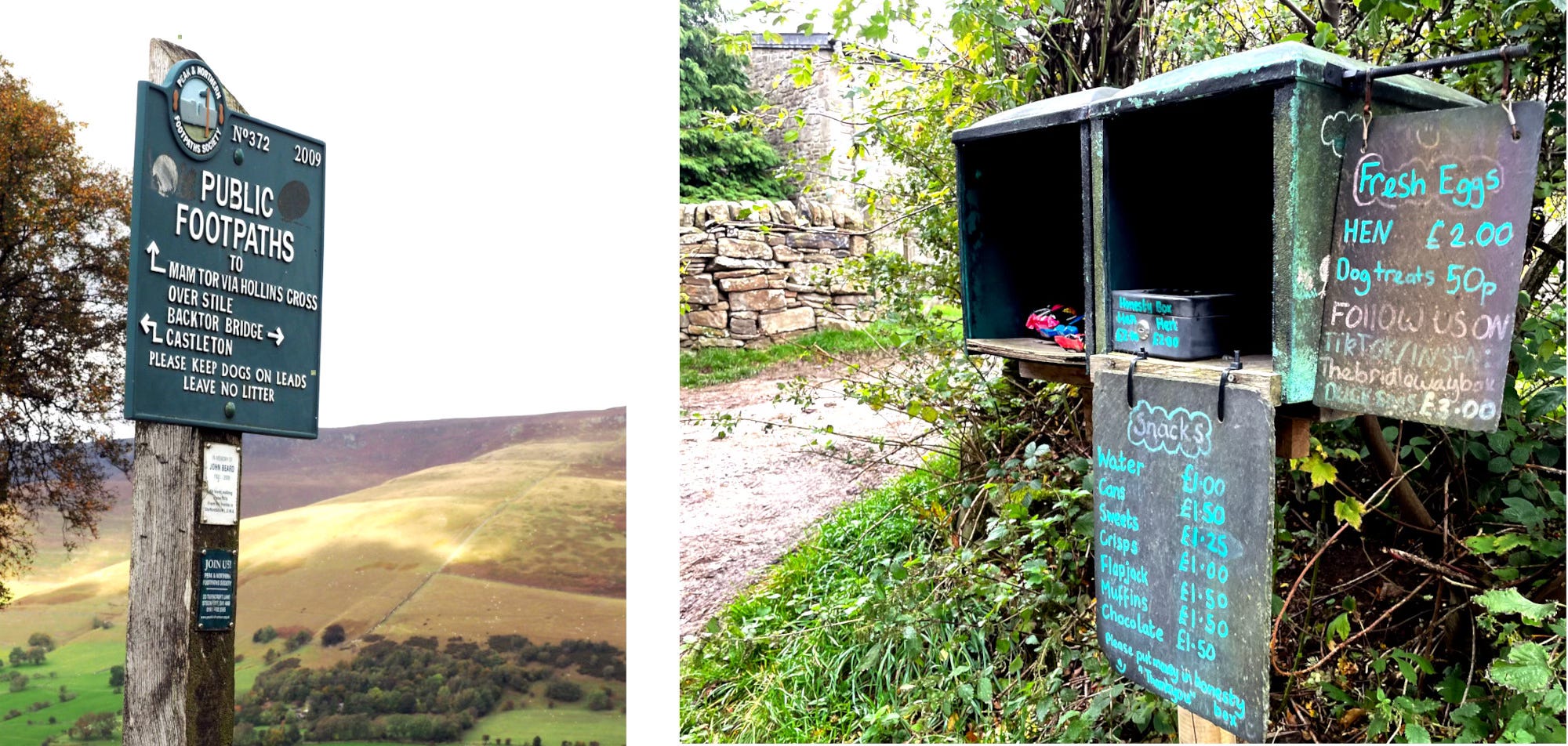
A pair of battered crates on a wooden post turns out to be @thebridlewaybox (as available on several social media networks) selling eggs, chocolate bars and dog treats via an honesty box.
Mary notes all this for her route review, and higher up she squats with her phone to measure the gradient. Not everyone goes to so much trouble, she says, but she takes her job as voluntary community cartographer seriously. She says there were discussions about the route among several reviewers, and they’ve already made a few tweaks between them.
We’re following a bridleway, a path suitable for bikes, walkers and horses, which makes the route more passable, with gates instead of stiles. And traversing the hillside from Hardenclough Farm towards Hollins Cross is a far better route than the direct numbing quagmire up the hillside many of us usually follow.
These touches matter. The route found by Mary and colleagues will work for more people, and it’s more fun. The Slow Ways ethos is to value beauty as much as efficiency and practicality, and that’s why so many volunteers are out there every day creating the network.
Mary enjoys the hillier routes of the Peak District, she says, after too much time plotting the “endless cowfields of Cheshire.” And the reviewing and rating system she carries out during her walks gives users the confidence to actually get out and walk the route, she explains.
In the early Covid days, it was often an online exercise of plotting without visiting. There were some duff plotters out there, she says, believing you could fly over rivers, or follow a Roman road that hadn’t existed on the ground for hundreds of years.
More recently her reviews have noted the issues that some walkers may miss, of a direct route between fences on an inner city track littered by syringes and mattresses, for example. A woman on her own might reject such a route because “there’s no escape route for half a mile,” Mary says. So with a bit of exploration, she might find a more open parallel route a few hundred yards away, and suggest that instead.
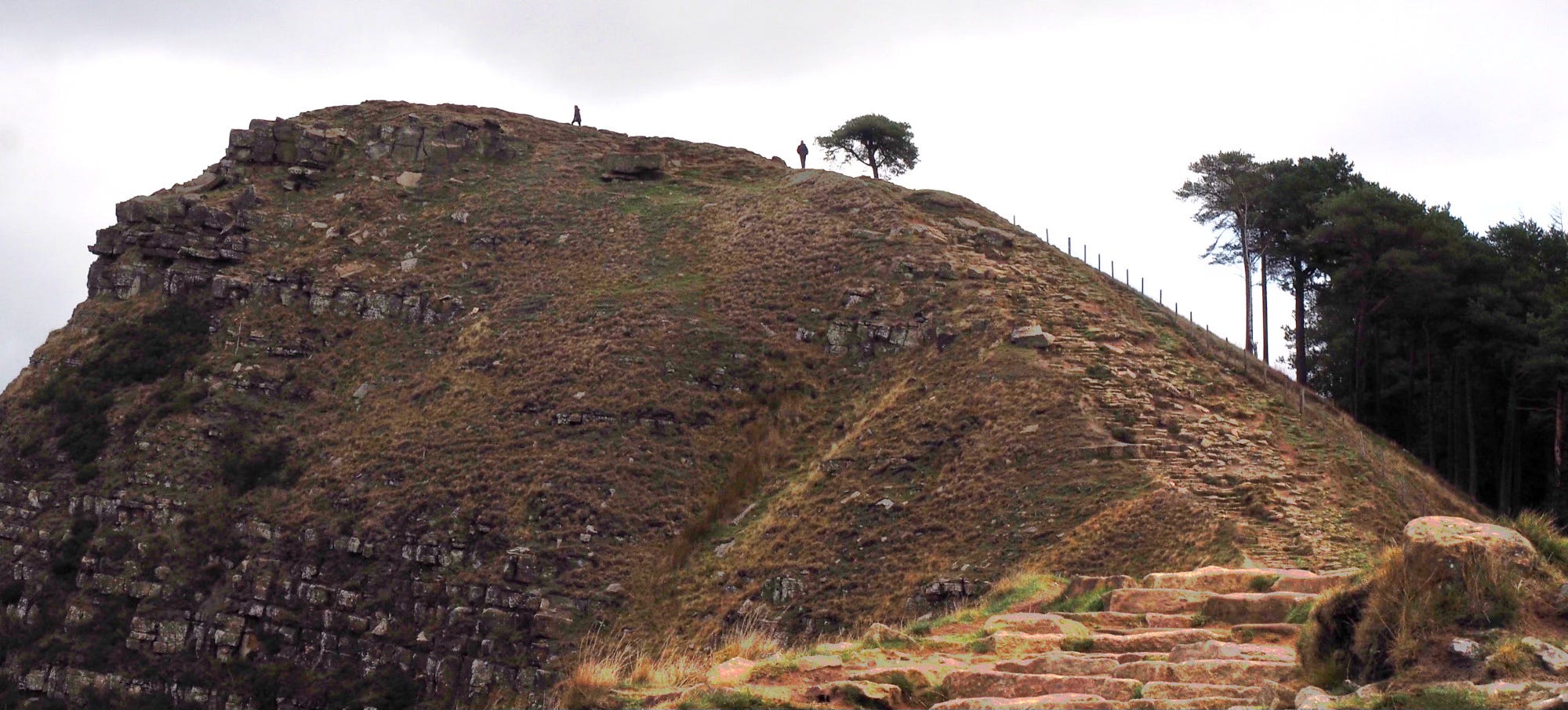
As we reach Hollins Cross and clamber up the Great Ridge, you sense this route has carried human travellers for centuries. The old factory flagstones are more modern, protecting the route from erosion, but the dips and hollows tell of the coffin bearers and workers of the past who had only one way to get from Edale to Hope: on foot.
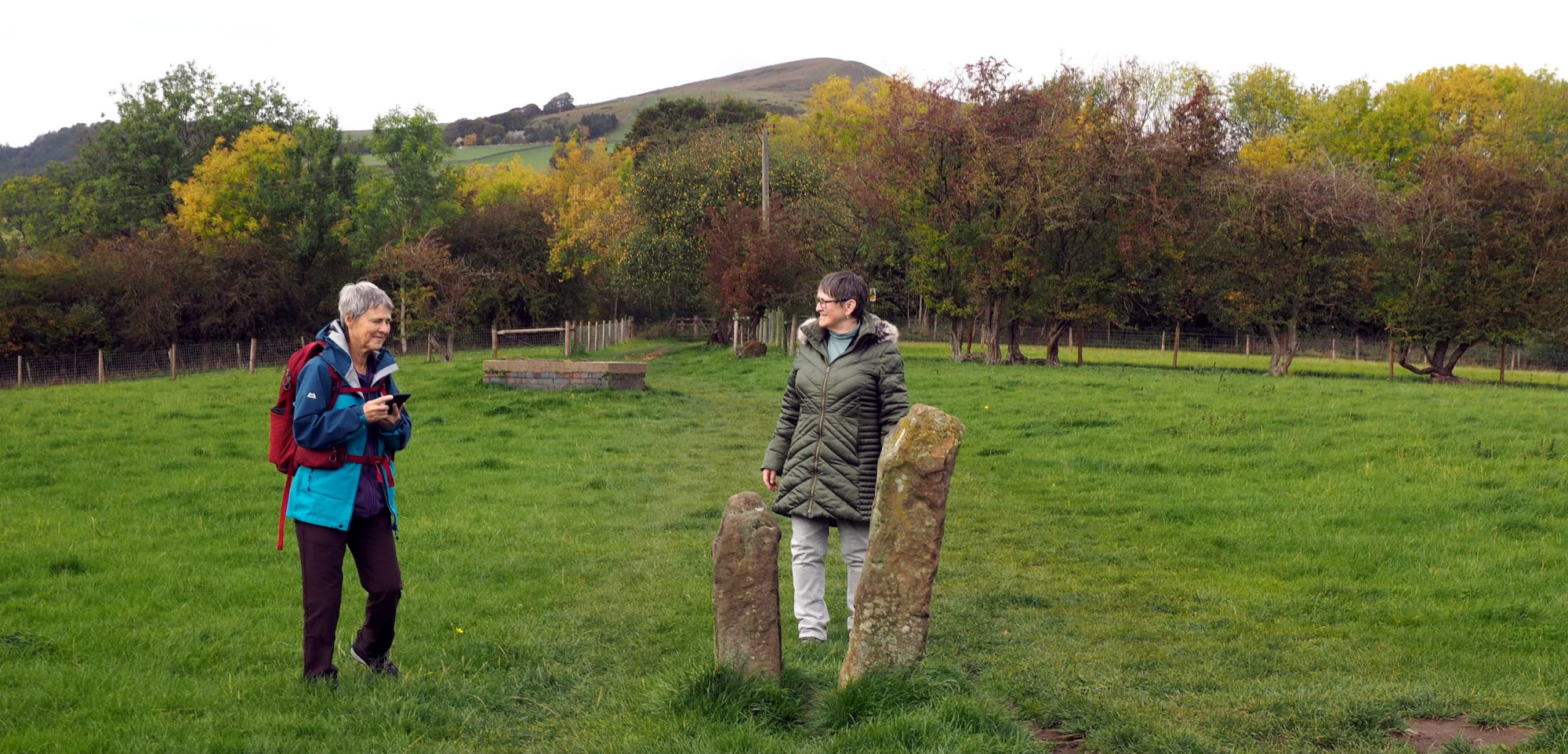
Susan and Mary have been working on connecting Manchester with Sheffield by Slow Ways, and this is one of the final sections.
Trains and buses allow you to do these A to B walks, says Mary, whereas the usual idea for many Peak District visitors is to seek a walk from a car park back to your car again at the starting point.
“I’ve done so many A to B walks that a circular walk from a car seems pointless to me now,” she says. “You get a wider variety of terrain. You cover more space than if you go in a circle.”
“You think more about the walking if you do it this way,” says Susan. “If you go from one place to another, you’ve actually travelled.”
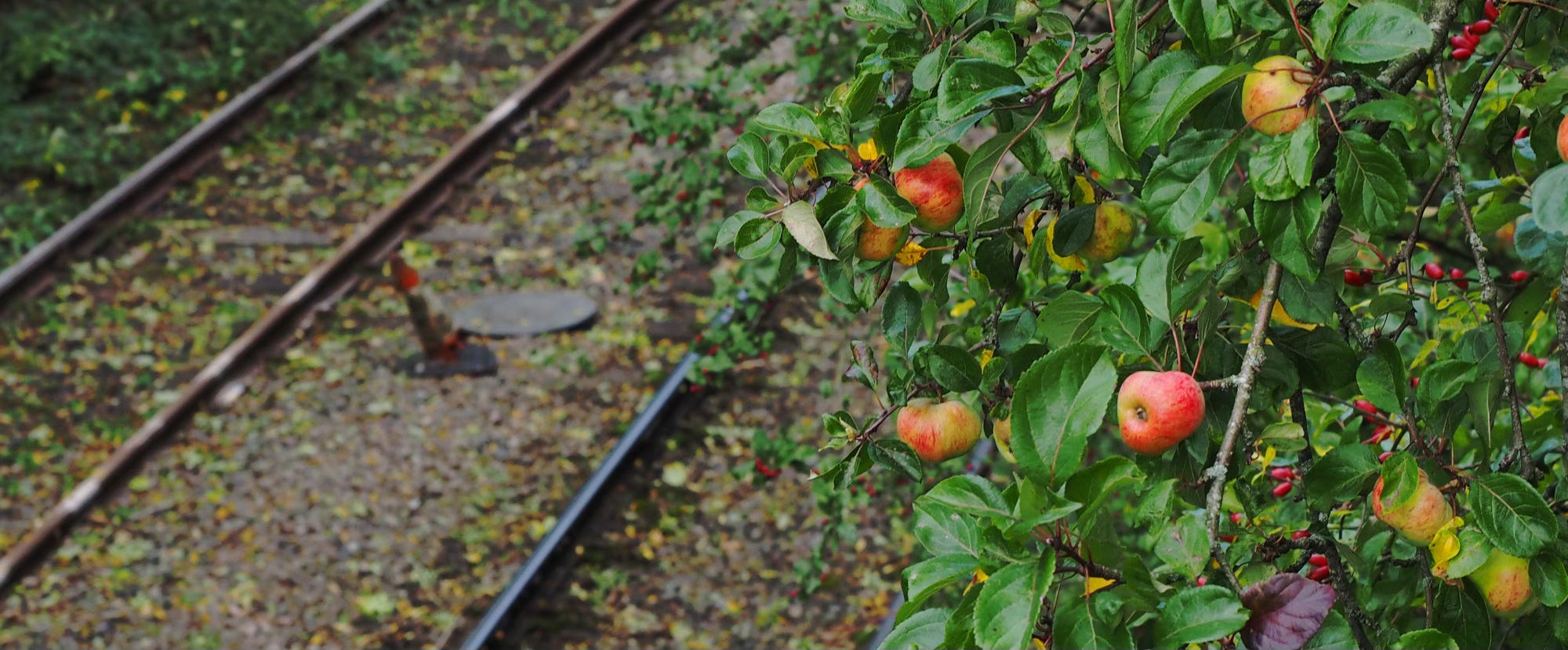
We cross a mystery railway line, by an apple tree maybe grown from the core of a hungry autumn traveller sixty years ago, and we watch Honey Fungus engulfing a stump that’s older still.
You can feel the history of the old route heading down to Hope, and in the village itself. EDAHAT3 follows field paths, where the hedges or walls have gone but the stone gates remain, and then through Hope’s hidden common fields, where we exit, pursued by chickens.
Routes mapped, checked, reviewed and shared make for routes that will be used. And that’s why Mary and Susan do what they do, along with all the other reasons people enjoy going for a walk together.
We’ve seen wildlife and history, climbed bracing hillsides, chatted and enjoyed each other’s company, and taken a route followed by generations of people before us.
I head off for my bus, while Susan and Mary step out with their apps and notebooks on the next stage of EDAHAT3, to help us all find a Slow Way to Hathersage.
Beaver Briefing
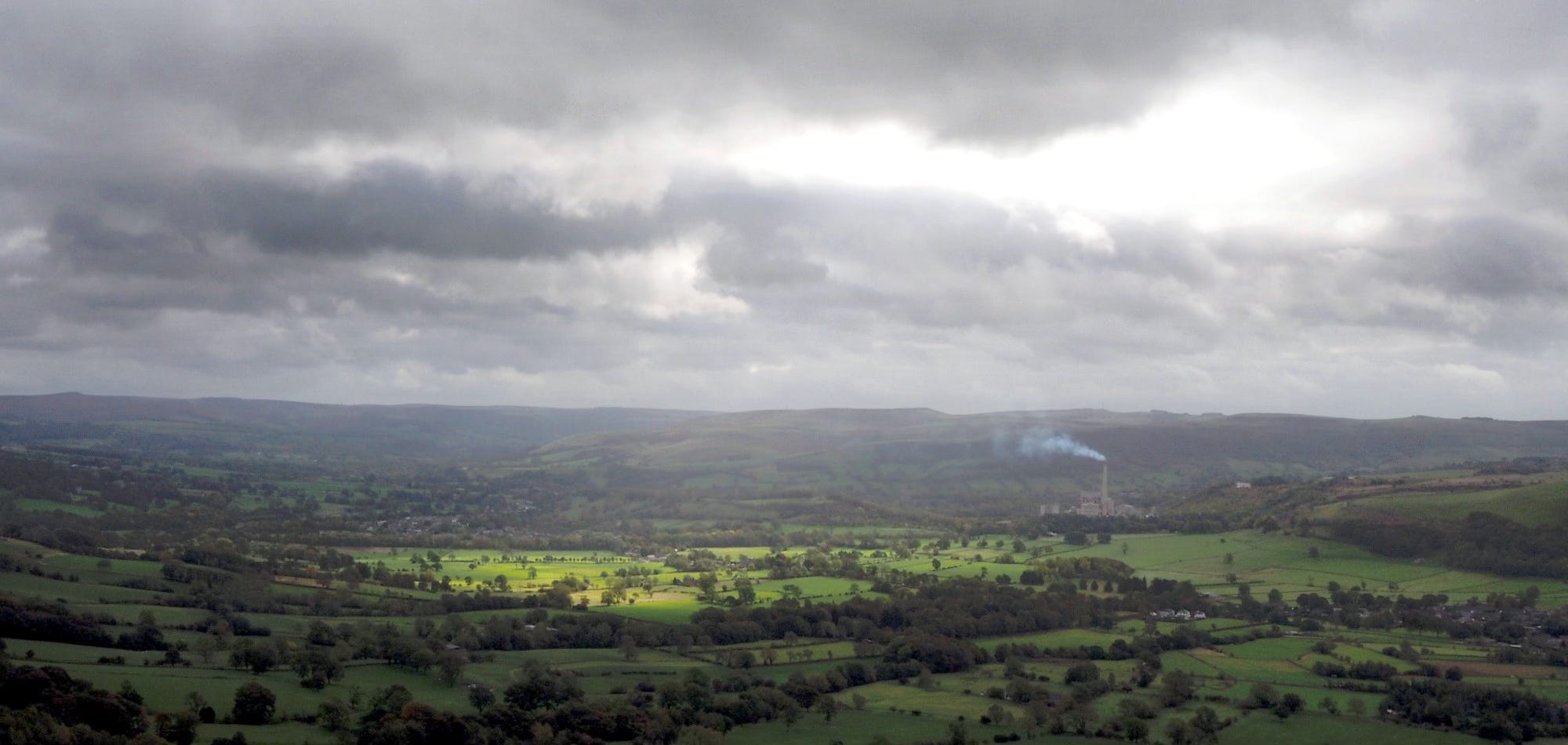
I hear the city’s first Eurasian Beavers for well over half a millennium are getting closer. A set of consultants are narrowing down the options from 12 or so potential sites around South Yorkshire, and will hopefully soon offer a short list of up to half a dozen possible locations to present in an application to the government’s Natural England agency for a “licence to release beavers into the wild.”
A single viable site is not really enough, as there needs to be somewhere to move beavers if there are problems, or to cater for growing beaver families. And I hear a designation from the consultants may come back as optimal or suboptimal, which may well have a bearing on a successful bring us our beavers application.
I reported earlier this year that the day can’t come soon enough for many, since the Eurasian Beaver is seen as a keystone species for the dams and wetland habitats we need to reduce the flow of floodwaters and improve biodiversity.
Cautious experts warn that there’s still a lot of work to be done, not least consultations at the chosen sites, to get the local application approved. But I’d be surprised if at least one of the two strong contenders I’ve heard about (Blacka Moor and Shire Brook) didn’t get the thumbs up. So, when will Sheffield get its beavers?
All any of the hopeful rewilders will tell me is that once the application goes in, they hope it’ll be months rather than years. We’ll keep you posted. Why not subscribe below, so you’ll be the first to know?
Our Beaver explainer for full subscribers is here.
More What’s On Out There (from Sunday 26th October)
A tiny selection from our new (and regularly updated) What’s On Out There news and listings post for October & November.
Sun 26th - Peak District Ranger Walks - Autumn stories (5m - £10)
Mon 27th - Fungi walk at Burngreave Cemetery
Tues 28th - Friends of Ecclesall Woods volunteer & footpath repair session
Weds 29th - Friends of Whirlow Brook Park Pond Clearance day
Thurs 30th - Green City Action Grimesthorpe community allotment
Fri 31st - Eco Day at Graves Park
Sat 1st Nov - Fungi Walk at Wardsend Cemetery
Sat 1st Nov - Friends of the Porter Valley Tree Walk with Gerry Firkins (£5/0)
Endcliffe Park Meadow
The first few metres of a new meadow in Endcliffe Park will arrive this week, with native wildflowers selected by friend of Bill’s Mother’s Gerry Firkins, of Sorby Natural History Society.
There’ll be a family planting session at around lunchtime on Tuesday, I’m told. It’s hoped the meadow will eventually screen the park from Rustlings Road with a beautiful array of wild Sheffield plants and flowers.
Thanks for reading. Longer posts like this take quite a bit of time and money to put together. If you find this kind of thing interesting, how about joining our unique social enterprise publication as a full subscriber? You’d get a warm glow inside, and access to all of every post we ever publish.
And if you’re already one of our wonderful 300+ paid up supporters, thank you for being a crucial part of It’s Looking A Bit Black Over Bill’s Mother’s.
Thank you for a great newsletter as usual David. And even bigger thank you to Susan and Mary for all the work that they do💚. And great to hear about Slow Ways, what a fabulous initiative.
What a lovely review of our walk from Edale David - beautifully written and very evocative. Mary and I had an exceptionally pleasant walk, and it was so good to meet you!
I hope people are encouraged to leave their cars at home. Some of my strongest memories of Slow Ways walks and other times are not always the beautiful views and cosy pubs, but also the bits that are a little uncomfortable, even a bit frightening. When you get back into your comfort zone (as the popular phrase has it), you feel a bit stronger and more confident. Quiet triumph - I recommend it!