


Morning. We have a mystery harvestman in today’s post, and a major nature writing prize for a new Sheffield author. There’s news that Hardwick Hall has witnessed a national record for female endurance running, and an update on the fast growing Slow Ways network.
And if you missed yesterday’s Commoner’s Muck Society Pages, we featured a new community-minded Book Club from Dr Jo Maher, and the next steps to catalogue and celebrate the city’s wild space volunteer organisations.
If you like what you read here, and can run to the cost of a posh coffee a month, it’d make our Sunday if you could join in to help us pay the bills below.
Wall Watching
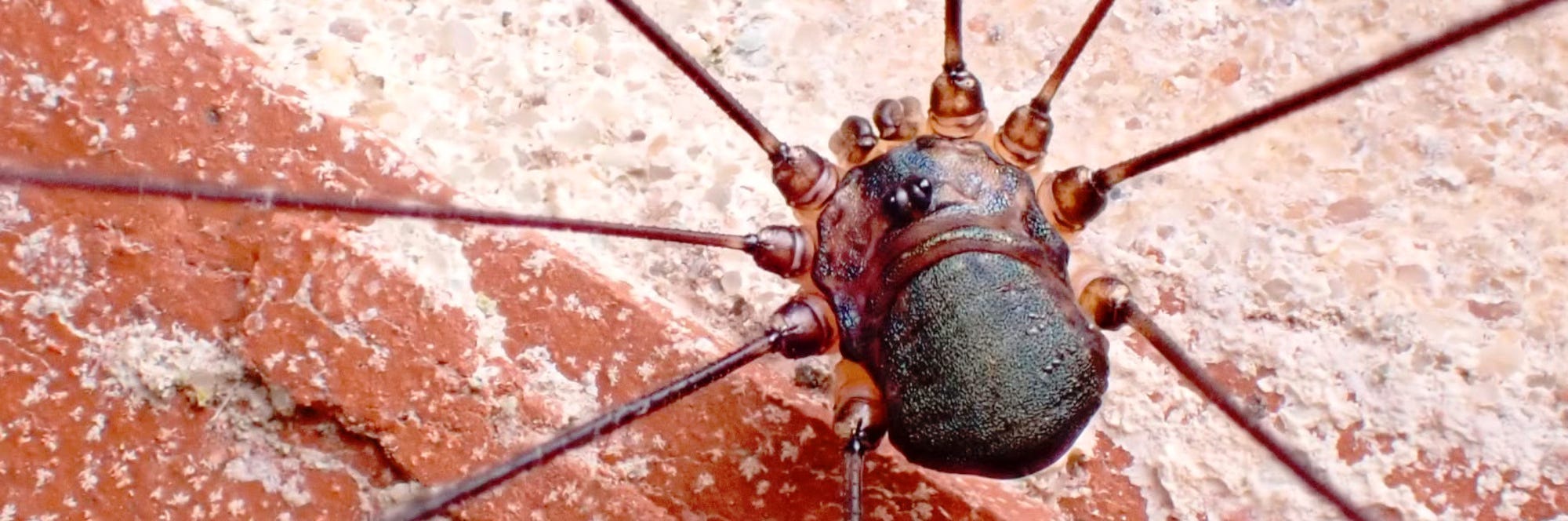
How about an unknown creepy crawly with a six inch leg span? And a gang of over a hundred of them waiting under the bridges of Attercliffe? The good news for arachnophobes is that these are not spiders.
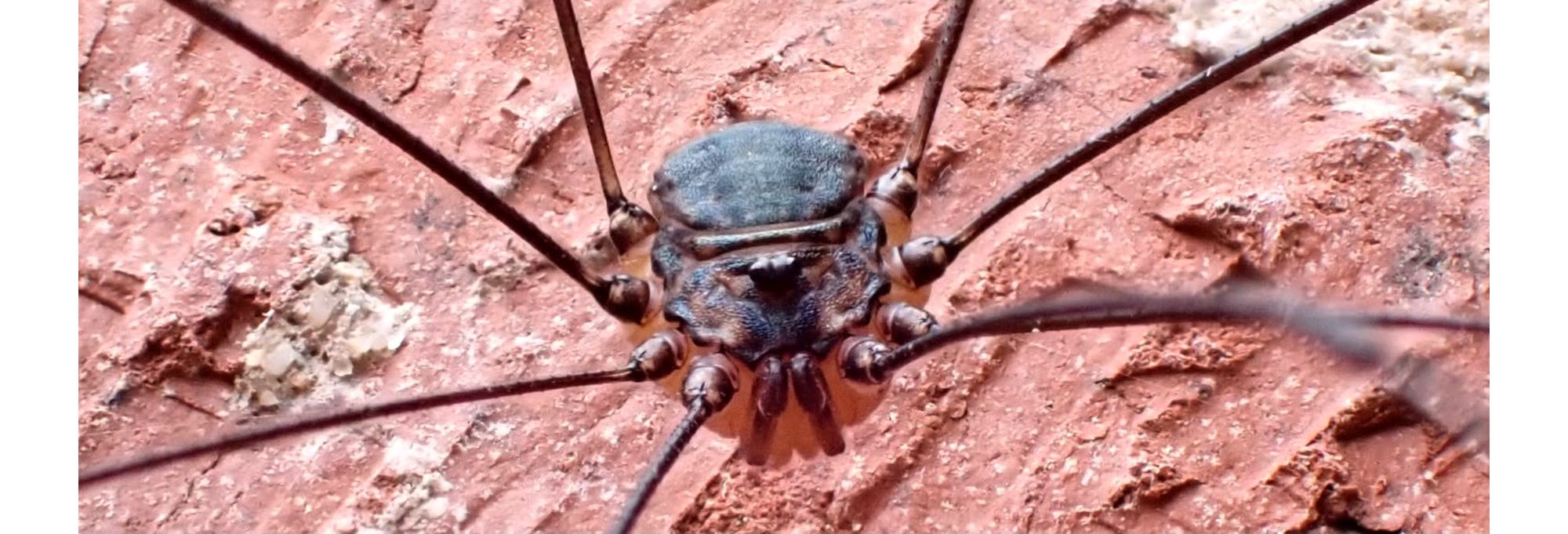
Sorby Natural History Society launched a discussion about these beasts after member Andrew Darby posted a set of fabulous influencer photos. “Beautiful metallic green body and a creamy orange underside,” he said admiringly.
They’re a mystery species of harvestman, one of several spindly bug families many of us call Daddy Long Legs. A tiny but rather incredible body is supported by eight crazily long appendages (let’s call them legs, but the creatures use them for seeking out food, and reaching out to photographers like Andrew too).
As yet, this particular species is known only as Leiobunum Species A, having first appeared in the Netherlands in 2004 and eventually spreading to Worksop in 2009, and then across South Yorkshire, Sheffield and the UK a few years later.
No-one knows where Leiobunum Species A came from, and it’s currently awaiting an official name, but three days ago Sorby member Pete Mella spotted one on the wall of the Sheffield Hallam University Tesco, followed by a series of other sightings around the city - harvest time in early autumn is traditionally when adult harvestmen appear.
“It’s that time of year for walking along staring at walls,” said Sorby harvestman enthusiast Paul Richards.
The huge mystery species is “now everywhere, it seems,” he said, adding there were “large aggregations” under the bridges of Attercliffe a few years ago.
“Well worth a look,” he advises, of a species distantly related to both spiders and scorpions, adding that it’s so big you need both hands to actually hold it.

Bests of Hardwick
Three British women have underlined how female athletes can be better equipped than men to cope with mind-bendingly tough endurance events.
(See our Ultra Women piece by Ellen Beardmore last year that discussed some of the factors involved, uncovered in the book by Emma Wilkinson and Lily Canter).
On 5th and 6th September, ultra runner Hayley Wilson, from Worksop, ran a 4.167 mile course around the grounds of Hardwick Hall once every hour, for 39 hours.
Awesome, but not quite awesome enough to win the event, as her Welsh rival Becky Atkinson went on for one more lap to win the 2026 Rasselbock Autumn Backyard Ultra, by clocking up 40 laps (or yards, as Backyard Ultraists confusingly call their four mile laps).
In almost two days of near constant running, Becky Atkinson ran 166.68 miles, while Hayley Wilson ran 162.52.
Third place went to Hollie Jones, from North Yorkshire, with 36 laps / yards (150 miles) while the top placed male runner Tim Harper ran out of steam at lap 34, twenty miles less than the top two runners.
Backyard Ultra races began 15 years ago in Tennessee, and have spread around the world. The standard lap length allows dogged competitors to clock up 100 miles in 24 hours, in a theoretically achievable format: you can choose to run your 4.167 mile lap fast and take a break for food, comfort or reflection about what on earth you’re doing for 15 - 20 minutes. Or take it slow, and have a few minutes rest - as long as you take a deep breath, and get going again at the next hour mark.
Everyone keeps at it, day and night, until they’re either timed out or fall apart with exhaustion, and the event goes on (for days, sometimes) until there’s only one runner able to set off and complete one more lap.
But it’s very comradely with all kinds of runners having a go. A nice touch is calling the second place runner The Assist: if she (or he) hadn’t been pushing the winner so hard, they’d never have got that far.
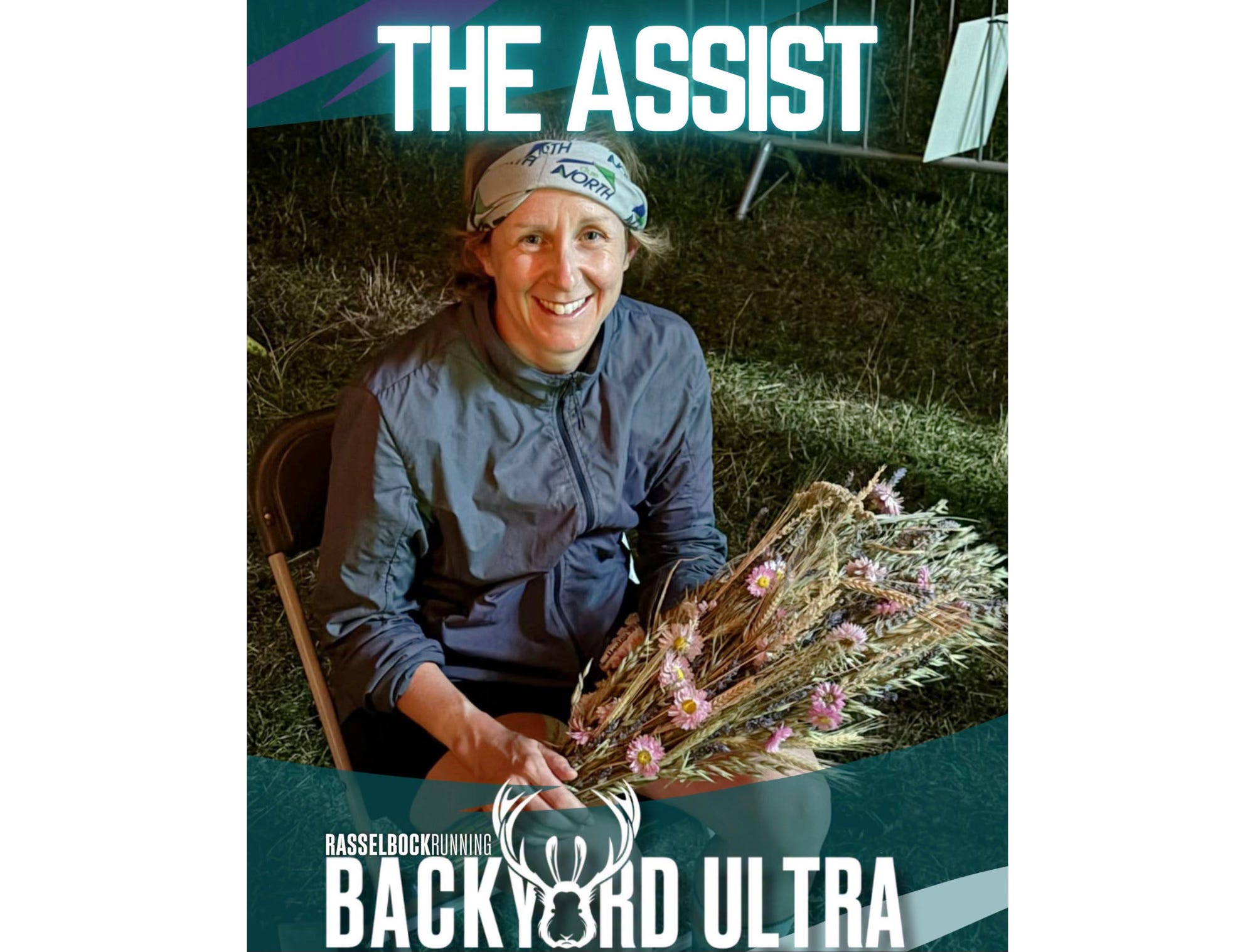
Organisers from Rasselbock say this is the first backyard ultra in the UK where the top three places have gone to women, although they reckon it may also have happened once among Iceland’s determined ultra running community.
At Hardwick Hall, runners aged from 22 to 64 navigated a course without glaciers, but dodging through fields, woods and farm animals, with 28 women among the 142 competitors.
We hope to find out more about this (up to now) unique result for next week’s post.
Slow Ways Speed Up
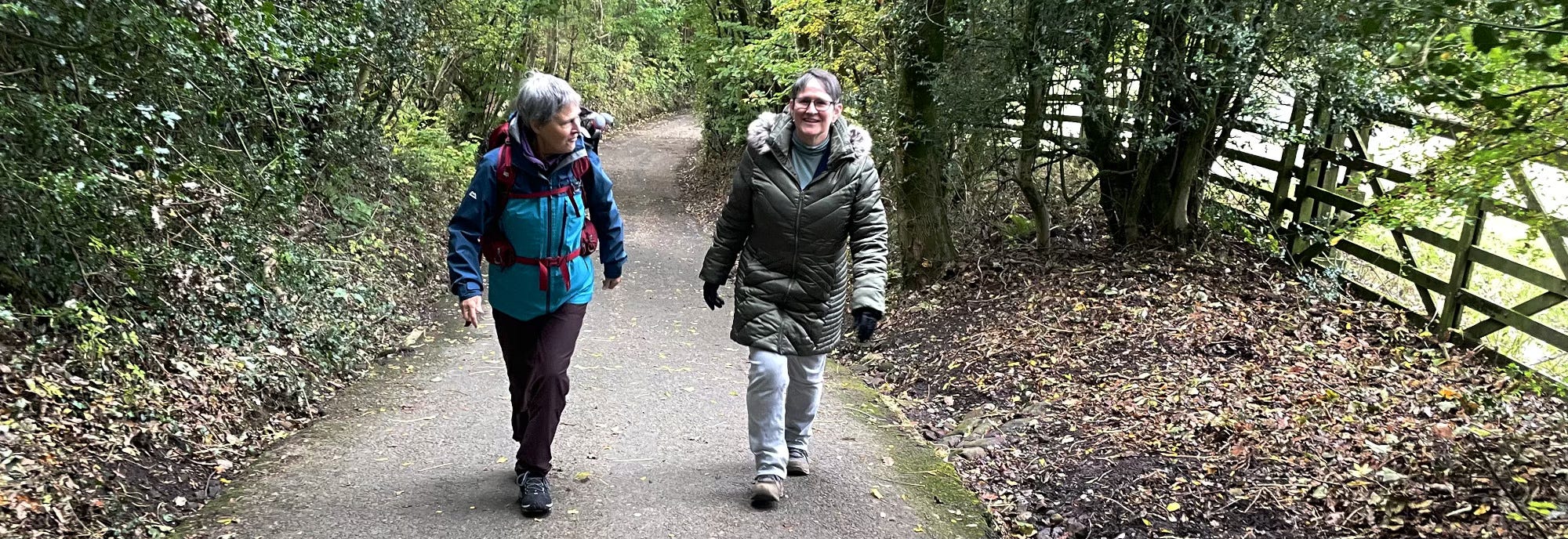
The colossal Slow Ways network is growing around us. We covered the ambitious national Slow Ways plan a year ago, thanks to Susan and Mary, volunteer sisters guiding me from Edale to Hope via a network of ancient pathways.
The idea is to use a huge network of volunteer reviewers and trail checkers to build a network of walking, running (and eventually cycling, wheeling and buggy pushing) routes so we can all travel round the country under own steam, at our own pace, along routes worth taking.
At present, there are 10,298 routes mapped, with 4,201 rated 4 or 5 stars, and 2,725 fully verified (which means at least three people have checked they’re good to follow).
There’s now a fully verified route between Inverness and Falmouth, should you so wish, says Slow Ways founder and Chief Exploration Officer Dan Raven-Ellison, adding that 65 year old supporter John Scott recently mapped out the beginnings of a Slow Ways National Park Trail, across England, Wales and Scotland.
It took him five months to walk a 2,311 mile route, that will now be checked and amended by other volunteers.
“I’d love to see the National Parks Trail properly developed, so lots more people can enjoy it - and for all the benefits that would bring to not just the travellers, but all the communities they would pass through,” said Dan Raven-Ellison.
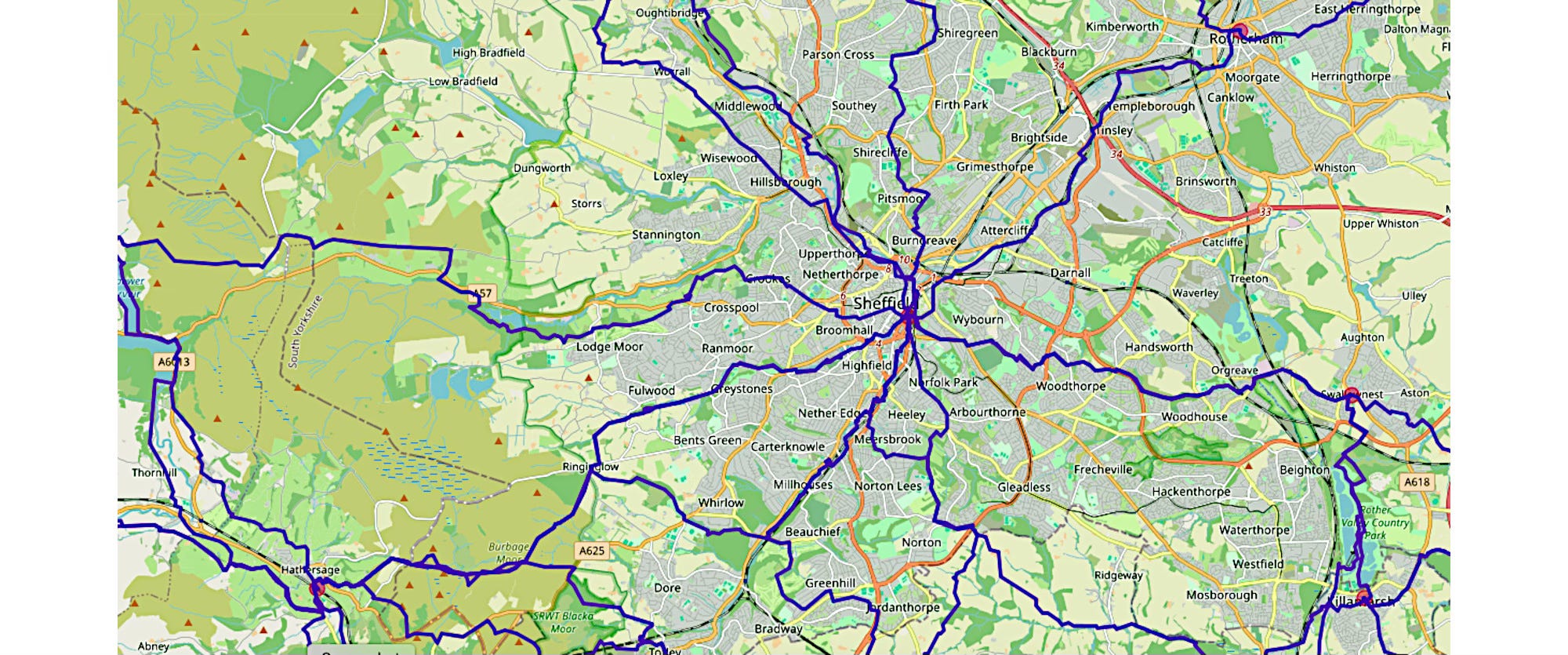
The next steps are to complete a new Good Ways app (hopefully by the end of this year) that will also allow mapping of shorter routes to local and national destinations, and routes for activities like horse-riding, skating, and swimming too.
But more volunteers are needed, said Dan, to try out routes and review them. “Every route in the network is an adventure, and there are over 10,000 to choose from.”
Ancient Wisdom
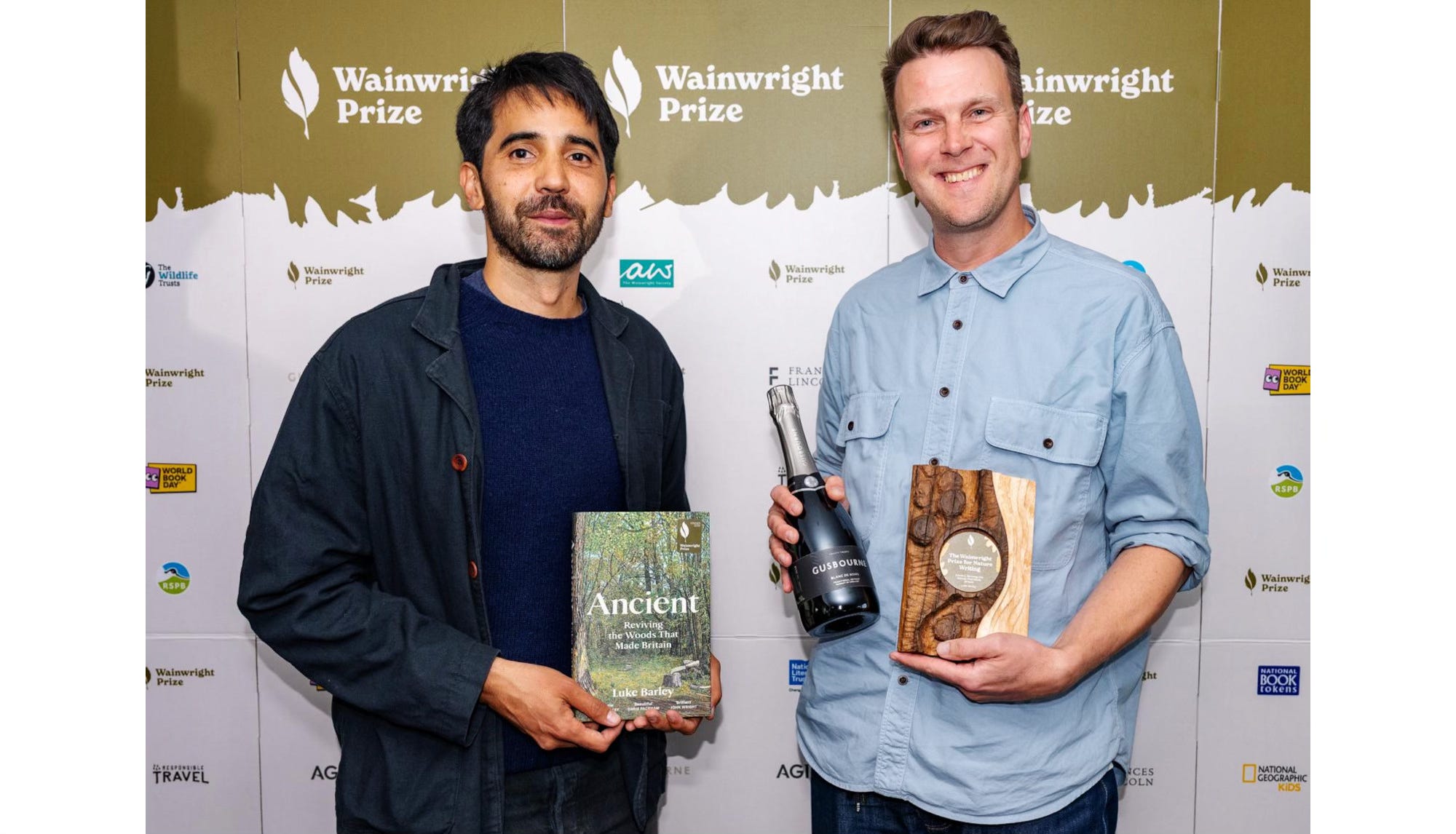
The winner of this year’s Wainwright Prize for Nature Writing is Sheffield author Luke Barley, for his first book Ancient, which we featured earlier this year.
“It feels bonkers,” he said after hearing the news last week. “My ambition when I started was that it would just be written and published. Just getting on the shortlist for a Wainwright Prize would have been my greatest ambition.”
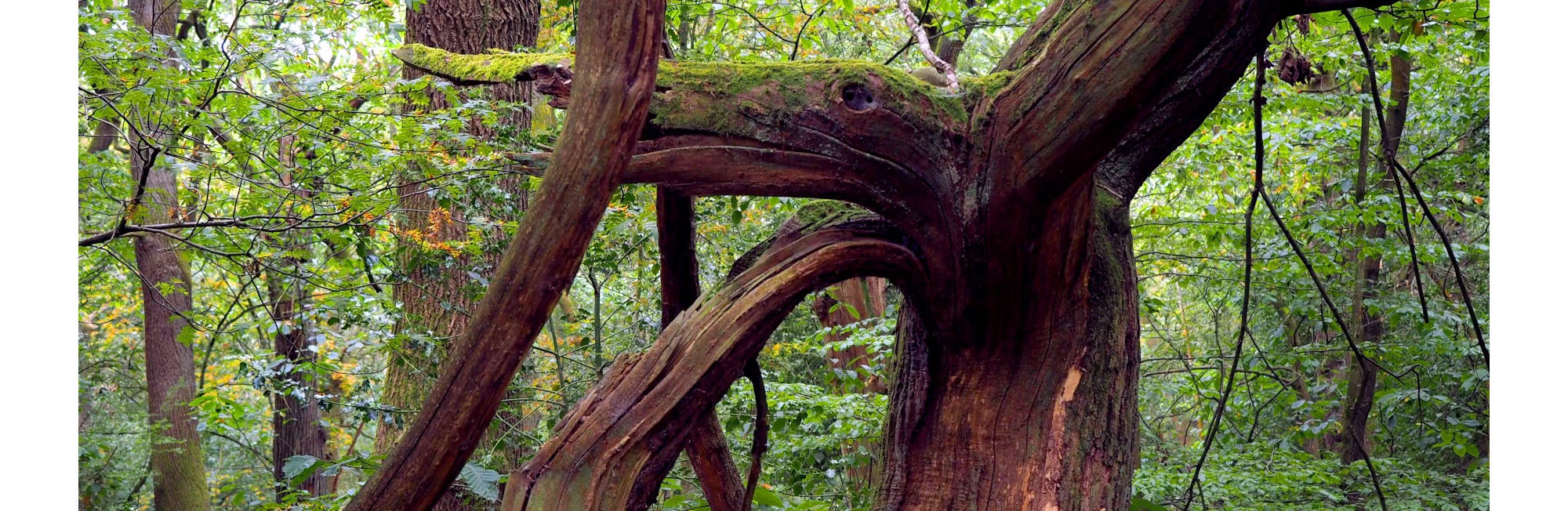
Ancient covers the UK’s ancient woodlands from the perspective of a tree worker: Luke began his career volunteering for the National Trust, coppicing and clearing and working British woods as people have done for millennia, until he eventually became the charity’s senior woodland advisor.
The unique point of his take on ancient woodlands is that he worked in them, he says. “The story of our ancient woods, and why they’re still good for wildlife and so important in natural history is completely interrelated with human history.”
He says previous authors and woodland academics like Oliver Rackham, George Peterken and Sheffield professors Mel Jones and Ian Rotherham did the primary research that allowed him to write the book.
“They spent the hard years in places like the dusty archives that really developed our understanding of these stories,” he says. “Any nature writer writing today, really is standing on the shoulders of giants.” And in his case, some of those giants are ancient oaks and lime trees, growing on after he’s worked them.
We’ll have more from Luke Barley soon - about extreme weather, beech nuts and local woodland, and we hope to have more extracts from Ancient too.
Now we’re publishing Commoner’s Muck as well as Sunday at Bill’s Mother’s and What’s On Out There, we really are at full stretch.
But we have a little supporter churn as people leave Sheffield, or change jobs or interests, so every week we have to encourage at least a handful of readers to upgrade in order to reach our sustainability for the future target of 380 full subscribers.
We’re now less than 30 people away, so if a few of you upgrade today, we might just get there before the winter. Thanks for reading.

More What’s On Out There (from Sunday 20th September)
A tiny selection from our (regularly updated) What’s On Out There news and listings post. Full version for full members, preview version for all at the link above.
Sun 20th - Final day of the Sheffield Walking Festival, Sheffield Heritage Open Days and Castlegate Festival 2026
Mon 21st - Wardsend Cemetery bird survey
Weds 23rd - Wadsley Commoners muck in morning
Thurs 24th - CycleBoost cycle training - confidence & learn to ride, Manor Fields Park
Fri 25th - SRWT Volunteering - Greno Woods
Sat 26th / Sun 27th - Hope Valley Art Trail (book free tickets, but day train / bus tickets may also be needed for visitors).
I'm glad someone else went to look at the insect. Fantastic view of what assume are joint socket where the legs join on. Not good news for me, unfortunately. I don't mind spiders but daddy long legs frighten the living daylights out of me. Can't sleep in a room until it's gone! Now I know not to venture into Attercliffe until the weather turns! Love the Ancient Woodland book. Amazing, Luke. Many thanks.