


Morning. A rewilding issue today, with campaigns and debates about what the word could actually mean. We have the success of a 30 metre roadside meadow, and a Secret Seating which seemed to get lost in last week’s long grass.
And hello to more new subscribers following our recent BBC spot. We hope to have an extra issue this week in our Commoner’s Muck section celebrating the city’s thousands of volunteers working across the Outdoor City’s wild spaces.
This post, and all the 300+ fairly interesting posts in our huge archive, have arrived in your inbox thanks to our wonderful 350+ paying subscribers, whose pocket money subscriptions are the only way we can pay the bills to keep going.
If you like what you read here, and can run to the cost of a posh coffee a month, you can upgrade and join in to help our social enterprise below.
Endless Strolling
Lots of people don’t want to be on their phones all the time, says local Rambler Sara Whitby. They know the value of fresh air. Hence the celebrations of our histories and landscapes this week. “We want to show we are the Outdoor City, with the Peak District on our doorstep,” says Sara.
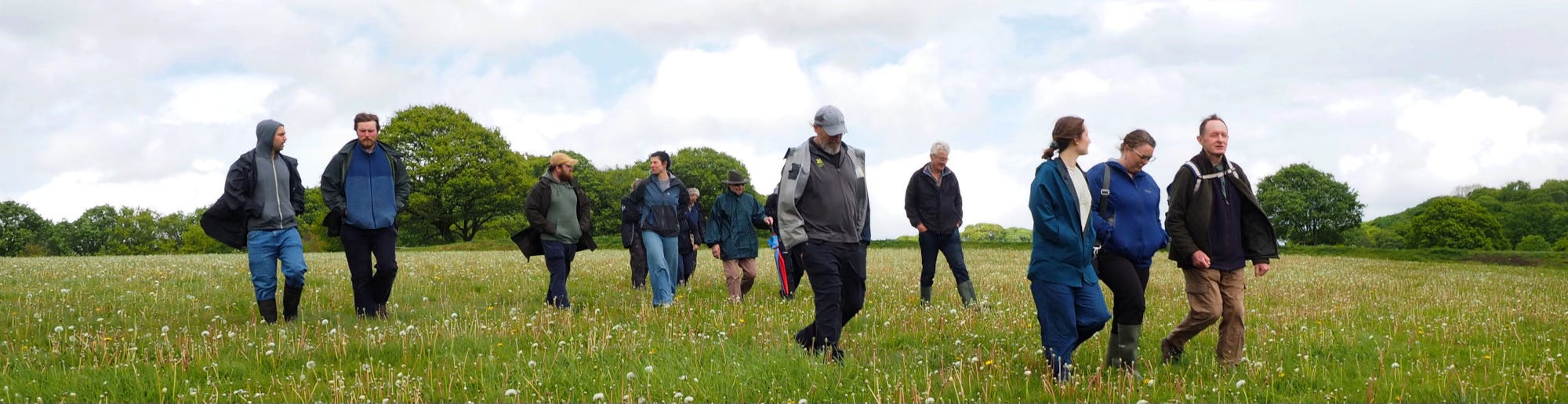
Over 200 assorted walks, talks, tours and visits make up the combined catalogue of the Sheffield Walking Festival and Heritage Open Days now running up to the 20th September.
The walking festival is organised by South Yorkshire and North East Derbyshire Ramblers, while Sheffield Civic Trust organise Sheffield HODS, which will guide you round parks, churches, chapels, libraries, factories, pubs and public drain covers. (And more, across South Yorkshire and North Derbyshire). Most events are free, although booking is often advised.
It’s a great combination, says Sara, with the opportunity to explore urban and rural and in-between locations you may never have heard of before, along with the social aspect of walking with different people as you learn about the places around you.
Younger people have been joining the ramblers for some years now, she adds, and we’re now seeing new generations of ramblers along with the traditional post- retirement explorers. Instead of doom scrolling, she says, you can go on a walk with people of all ages from different walks of life.
Rewilding Britain
Native English woodland “burns like wet asbestos” said Oliver Rackham.
Writing long before this year’s fires sparked a rewilding backlash from militant grass mowers and heather burners, the great writer and conservationist was pointing out how native English woodlands, with broad leaf trees and lots of damp shrubs and wildflowers, are soggy fire breaks compared to non-native conifer plantations. (Flammable Scots Pines are the exception among native trees, he noted).
This week the Rewilding Britain charity got in touch to tell us the vast majority of the British public seem to recognise this willingness of natural landscapes to do their best to look after themselves, and us, as the weather worsens.
62% of us want more investment in natural solutions to extreme weather, while only 3% think we should do less rewilding, according to a Rewilding Britain poll carried out last month. (The poll, by YouGov, was a weighted survey of 2,079 adults on 27th-28th August)
Rewilding Britain are ambitiously asking the prime minister to launch a Climate Shock Fund for nature-based work to increase resilience to floods, droughts, and extreme heat around the UK. They’re hoping Andy Burnham will agree with Environment Secretary Angela Eagle :
“We know that healthy ecosystems retain more water and can help act as natural firebreaks,” she wrote recently, adding that such resilience also guards against flooding and pollution.
“The solution to raging wildfires is not more burning of our countryside. It is to restore and better manage our environment.”
Rewilding Britain supports a network of rewilding land managers, farmers and community groups doing their best to restore natural landscapes and seabeds around the UK. Locally, Burbage and the Eastern Moors Partnership are part of the network, along with the Wild Peak initiative by Derbyshire Wildlife Trust, which is now working across the whole of Derbyshire’s slice of the Peak District National Park.
The rewilding director of the charity, Kevin Cumming, recognised the importance of the “brilliant nature recovery work” happening in the Peak District, and around quite a few of Sheffield’s woodlands and wetlands. The evidence shows, he said, that rewilding and large-scale nature restoration is one of our best long-term defences against wildfires, flooding, droughts and record heat.
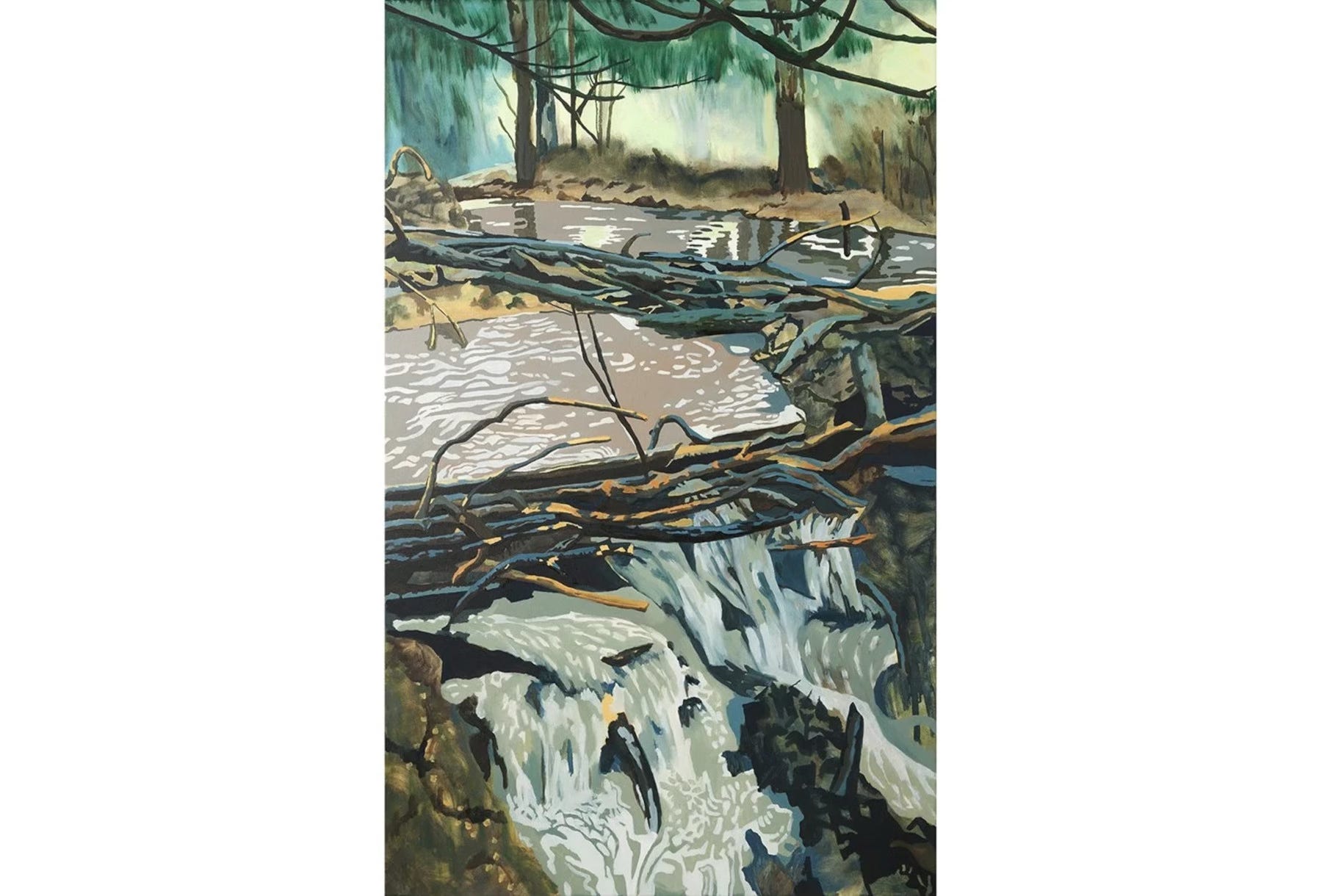
“Rewetted peatlands, beaver wetlands, native broadleaf trees, re-wiggled rivers, and reconnected floodplains all put water back into the landscape, building resilience and helping protect people and nature.”
We’ll have more on local Rewilding Britain work in future posts. Meanwhile you can support their letter campaign here.
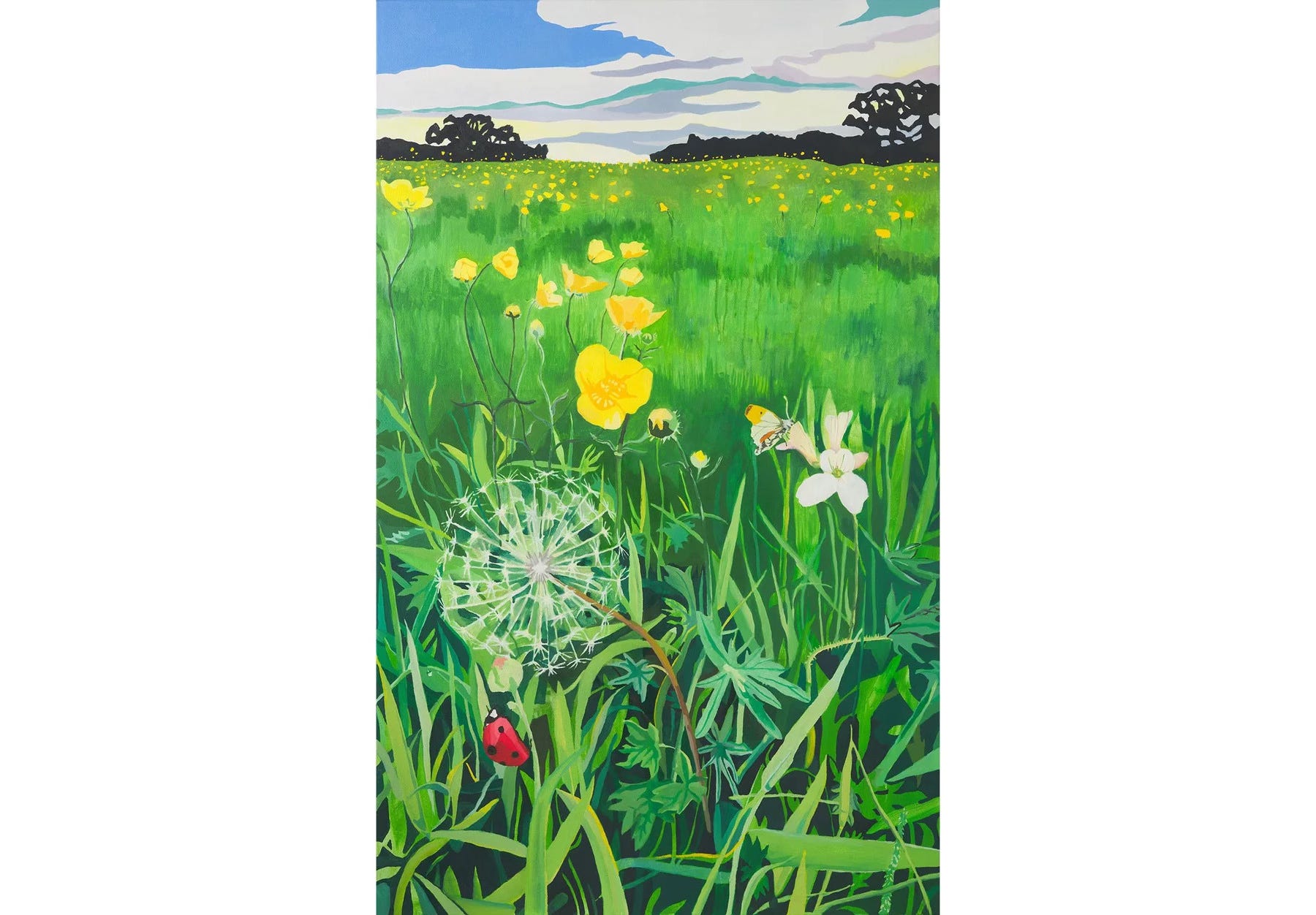
Thanks to artist Rebecca Howard for illustrations for this piece. She’s supporting Rewilding Britain through sales of her prints and cards.
Thirsty Work
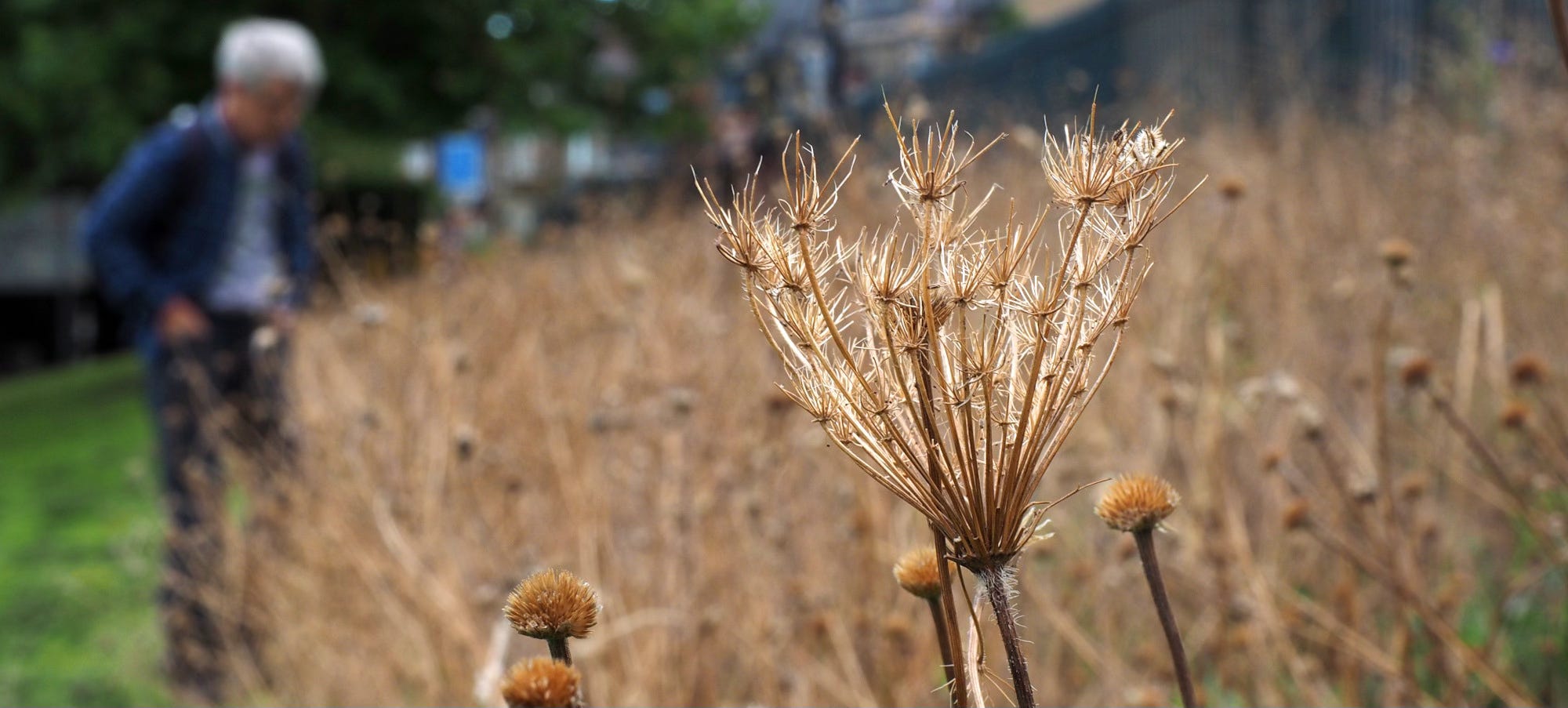
Let’s count Corn Chamomile seeds, says Gerry Firkins, not unreasonably. The long crispy stalks that produced them in the heatwaves four, three, two and one month ago are waving across the new Endcliffe Park meadow that he and dozens of local families planted last autumn.
Around 10,500 seeds on this one plant, we estimate, and look out across the new 30 by 3 metre stretch of tangled stalks and late summer flowers on the bank between the park and Rustlings Road. Many, many thousands we decide.
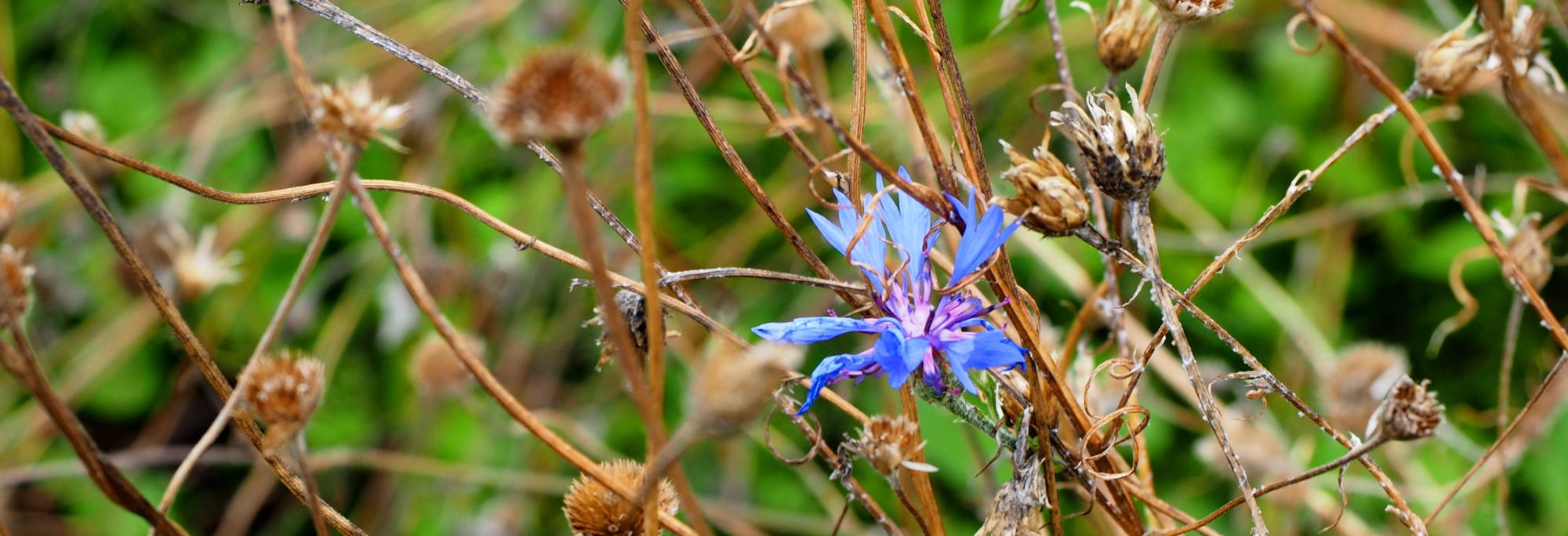
We find White Campion, and Cornflowers, and long lasting Red Bartsia, a pinkish plant that helps suppress vigorous grasses. Hundreds of Dandelions have appeared, probably from old seeds turned over when the new meadow was launched by the council last October.
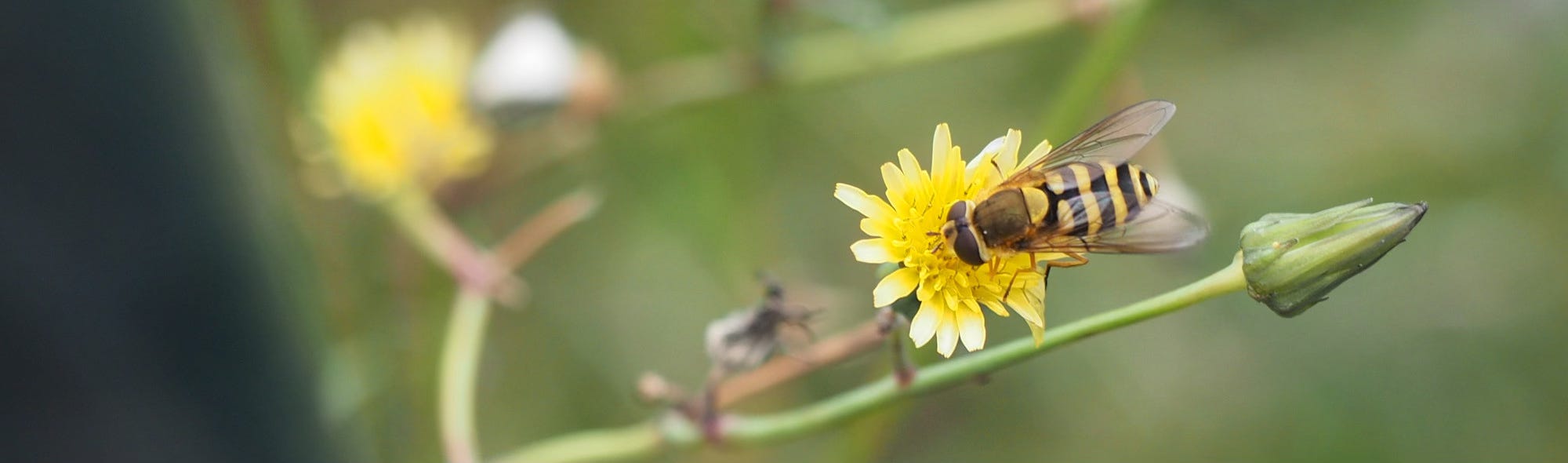
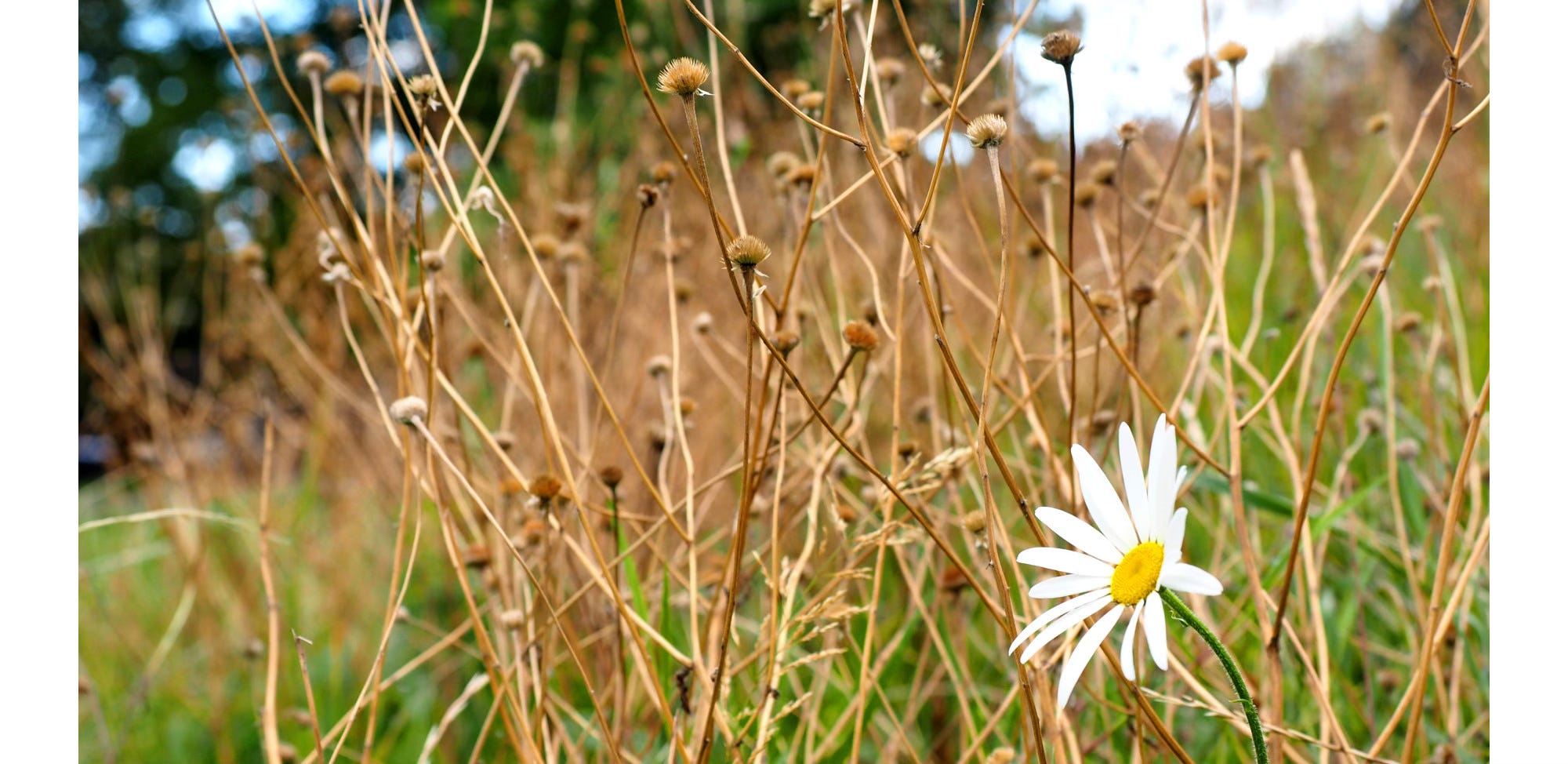
There’s Yarrow and Broad-leaved Dock, and just flowered Wild Carrot and a handful of Ox Eye Daisies that seem to have flowered a season earlier than expected. And amongst the profusion are hoverflies and wasps and Greenbottles, whereas a year ago, when Gerry (from Sorby Natural History Society) carried out a three hour survey on the shaved pre-meadow Rye Grass, there were literally no insects at all.
We look out over the dull green lawn of the traditional park below, where a handful of crows are pecking for leatherjackets from the recent rain.
He’d like to have seen Knapweed and Ladies Bedstraw coming through in the bustling meadow, but on the whole he’s happy with the results of last year’s nature recovery action for local flowers and insects.
But how, I ask, have they all done it in a rainless summer? Well, they’re native plants that have learned to survive here, says Gerry. But the extremes we’re getting now, he adds, are pushing them to the edge of what they may be able to cope with.
“Nature is very, very resilient,” he says. Many, like Wild Carrot, have deep taproots that can get down to wet patches of earth. Some have waxy leaves, or can roll their leaves to conserve water, and many simply produce so many seeds that some will find their way to damp or sheltered patches to make a survivable home, even in the summer of 2026.
And plant behaviour is quite amazing, he adds, with a botanist’s twinkle in his eye. The idea of plants having senses like us would have been scoffed at just a few years ago, he says. But experiments have shown that they can smell rain coming, and roots can grow towards nearby water by using senses tracking vibration as well as humidity.
“Can plants think?” he asks. “Not like we do,” he says, “but we still have a lot to learn.”
It’s likely there’ll be a chance to plant a longer new stretch of wildflower meadow here later this year (we’ll keep you posted). And Gerry will be giving his Amazing World of Plants talk at Sheffield Botanical Gardens on 27th October.
Rewild to When?
In this week’s rewilding issue, we need to be careful what on Earth we’re talking about. In October, a two day conference in Sheffield will be taking the word rewilding to task.
Christine Handley (from organisers South Yorkshire Biodiversity Research Group) sent over a conference teaser video, with Professors Ian Rotherham (from Norton) and Peter Bridgewater (from Australia) looking out at the luxuriant twenty first century landscape of Shire Brook Valley nature reserve.
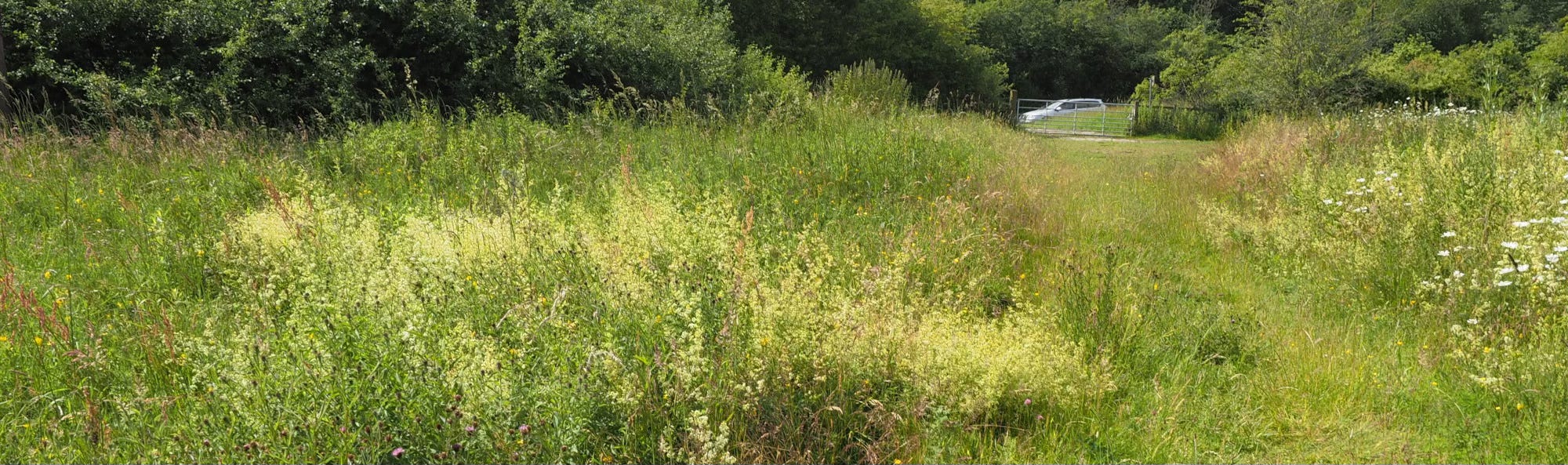
A few years ago you’d have been watching miners gathering coal here, they observed, and now this is an amazing collection of different ecosystems. In many British landscapes you’re looking out over the shadow of human history, sometimes going back 5,000 years, said Ian Rotherham. So are such landscapes natural?
And how can you rewild, when a landscape isn’t really wild in the first place? Now we need our land to help us cope with extreme weather and climate change, do we need to rethink what are native species or natural landscapes?
As we’ve seen in earlier posts, urban or post-industrial landscapes at places like Shire Brook can teem with wildlife again, after enlightened nurturing. So should that be called rewilding, wilding or something else?
As veteran ecologist Peter Bridgewater recalled from a debate long before extreme weather happened every year: “Are we throwing everything into the air, and seeing what lands?” Or should we have a plan?
The Nature in its Place? What is Native? conference is at Lees Hall Golf Club on 7th & 8th October
Secret Seating 21
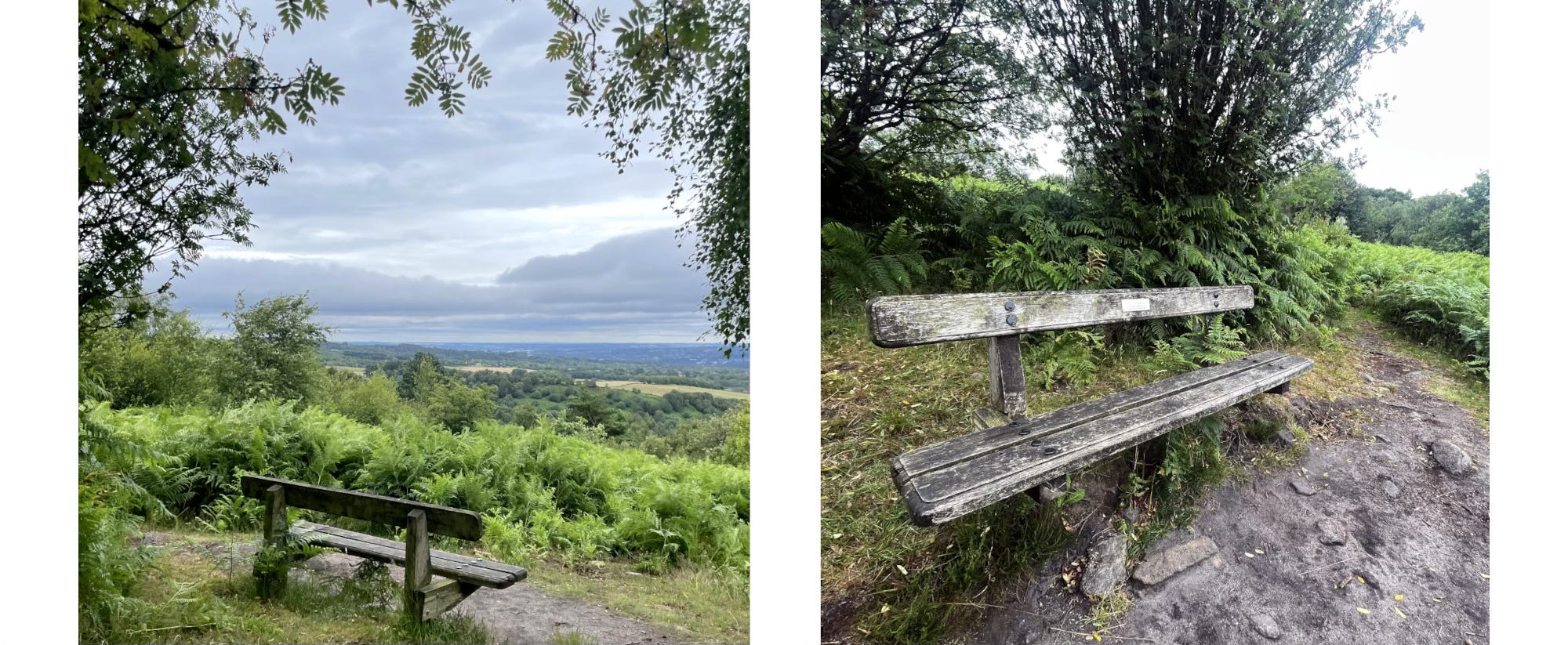
A surprise last week as no-one located this secret seat in a very popular location, only just off the beaten track. Where are you Tracey, Alan, Cassa, John and all our usual seat seekers? Two viewpoints of the same seat this week to make it even easier - let’s have your answers (or guesses) in the comments below, everyone.
More What’s On Out There (from Sunday 13th September)
A tiny selection from our (regularly updated) What’s On Out There news and listings post. Full version for full members, preview version for all at the link above.
Sun 13th - Sheffield Walking Festival - Street Art Tour
Mon 14th - SRWT Volunteering - Centenary Riverside (Rotherham)
Thurs 17th - Sheffield Walking Festival - Parkwood Springs
Fri 18th - CycleBoost cycle training - confidence & learn to ride, Hillsborough Park
Sat 19th - Friends of Whirlow Brook Park - orchard volunteering
If you’ve enjoyed this post, it really helps us if you can share it with your mates.
We can only cover our costs thanks to our lovely 350+ paying readers. But now we’re publishing Commoner’s Muck too we’re at full stretch, so if you’re able to help us for the cost of a posh coffee a month, you’d make our Sunday by upgrading below.
Thanks for reading.
I’m with you, Jeremy & Fredi!
I agree with Jeremy: Blacka Moor, E facing slope.